
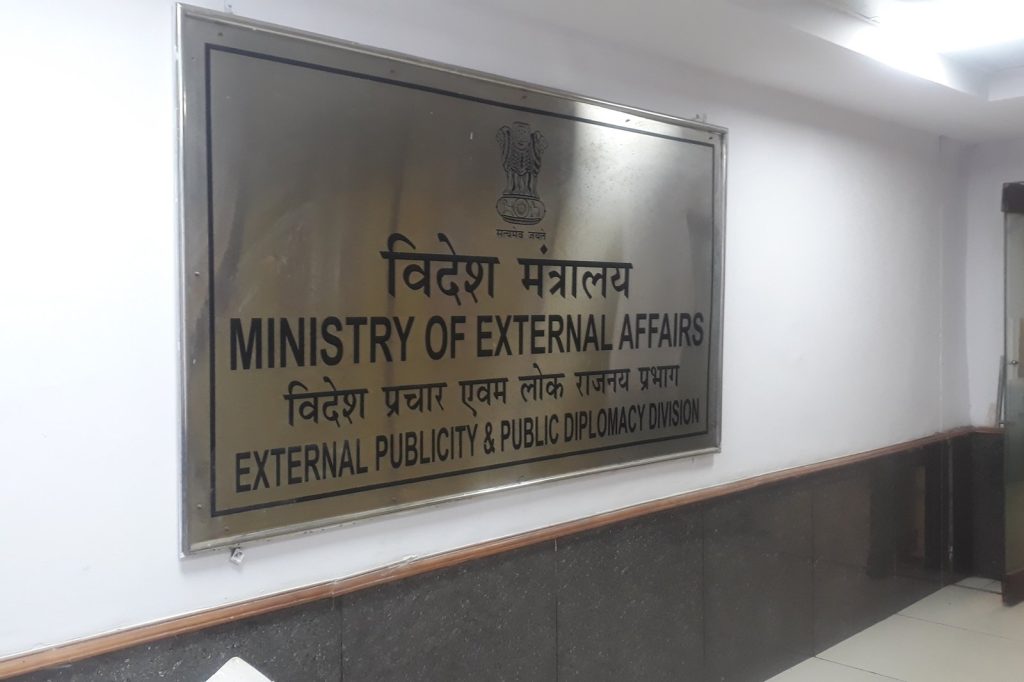
NEW DELHI — The idea that government bureaucrats should set the pace for artificial intelligence development is dead on arrival, at least as far as India’s foreign ministry is concerned. K Nagaraj Naidu, an Additional Secretary in the Ministry of External Affairs, told an industry gathering this week that private companies, not state machinery, will drive AI collaboration between India and the United States. No timeline was given.
No funding pledge was announced. The message was blunt: market forces, not top-down frameworks, will define the bilateral AI partnership.
This is not a sudden shift. It is the logical endpoint of a year-long deepening of technology ties between New Delhi and Washington. AI has become the central pillar of that relationship.
The Trump administration has made clear it wants American companies to set global AI standards. India, for its part, offers something those companies need: a massive digital consumer base and a startup ecosystem that has matured rapidly.
Naidu argued that the private sector is simply better equipped to handle the speed of AI development. Bureaucratic channels move slowly. Corporate labs do not.
The Indian government’s broader approach to technology governance backs this up. For years, New Delhi has favored light-touch regulation. Industry self-certification is preferred over prescriptive laws.
That model has worked. Major US technology firms have already expanded their AI research operations into Indian cities.
Bengaluru and Hyderabad have become hubs for machine learning and natural language processing teams. US-based cloud providers and chipmakers have established substantial engineering presences there. This is not theoretical.
It is happening now. The MEA official’s remarks simply confirmed what the market has already decided.
Both countries are exploring joint research initiatives. Data-sharing protocols are being discussed. But the core driver remains corporate-led innovation.
The state is stepping back, letting companies set the pace and shape of the partnership. India has positioned itself as a testing ground for scalable AI deployment. Its large digital consumer base gives companies real-world data to train systems.
Its startup ecosystem provides the agility that larger firms often lack. The combination is attractive to US tech giants looking to expand beyond domestic markets.
The MEA’s stance aligns with a consistent Indian approach to technology. The government has resisted the urge to write rigid laws for emerging tech. It has preferred to let industries develop their own standards, then step in only when necessary.
This has drawn criticism from privacy advocates, but it has also drawn investment from Silicon Valley. Naidu’s comments were made at an industry event, not a government press conference.
That detail matters. The audience was corporate. The message was directed at them.
The state is not the engine. It is the enabler. The US-India technology relationship has grown steadily over the past year.
AI now sits at the center of it. The official’s statement signals that New Delhi will not impose a heavy hand.
It will let the private sector lead, and it will follow where the market goes. No timeline. No funding.
Just a clear direction.
{“@context”: “https://schema.org”, “@type”: “NewsArticle”, “headline”: “MEA official says private sector, not government, to lead India-US AI ties”, “description”: “NEW DELHI — The idea that government bureaucrats should set the pace for artificial intelligence development is dead on arrival, at least as far as…”, “datePublished”: “2026-06-28T07:00:00+00:00T09:30:00+00:00”, “author”: {“@type”: “Person”, “name”: “Ethan Smith”}, “publisher”: {“@type”: “Organization”, “name”: “InfoPulse Today”, “url”: “https://newsfeed.infopulsetoday.com/”}}




