
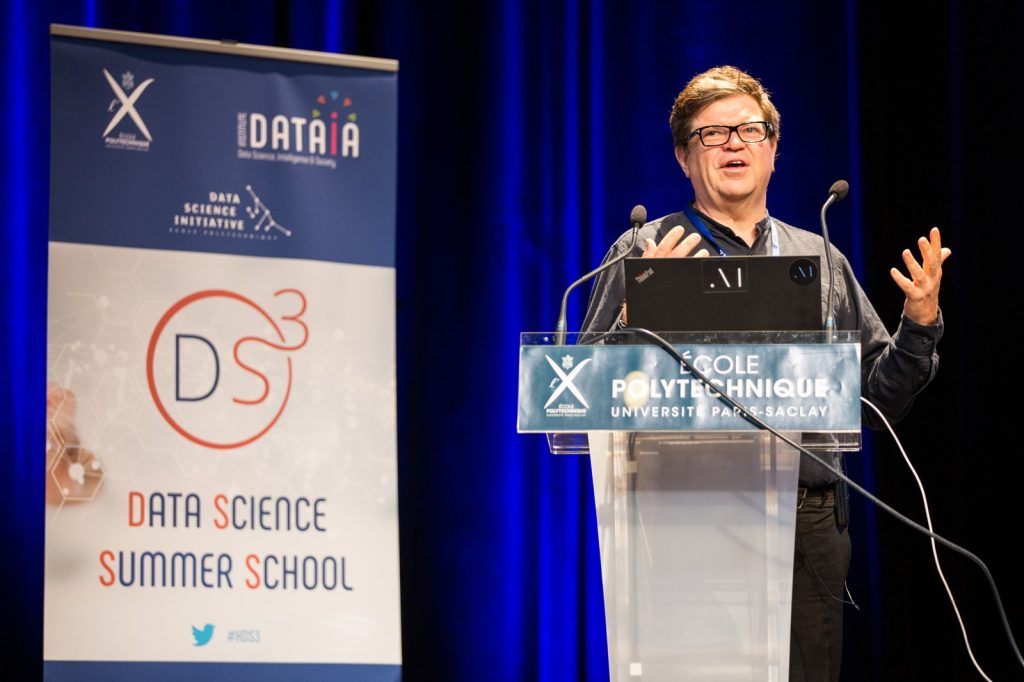
From a perch that bridges Silicon Valley’s velocity and France’s academic tradition, Yann LeCun guides one of the world’s most consequential artificial intelligence laboratories. Meta’s chief AI scientist and a 2018 Turing Award winner, LeCun was born July 8, 1960, in Soisy-sous-Montmorency, France. He earned a PhD in computer science from Université Pierre et Marie Curie in 1987, then crossed the Atlantic for an eight-year stint at Bell Labs from 1988 to 1996.
In 2013, he joined Facebook to found Facebook AI Research—now known as FAIR—and simultaneously holds a professorship at New York University, where he also served as director of the Center for Data Science.
The Architect of Modern Computer Vision
LeCun’s technical contributions underpin much of modern artificial intelligence. In 1989, he invented convolutional neural networks, or CNNs, which became the backbone of computer vision systems. He also developed the LeNet architecture for handwritten digit recognition and created the MNIST dataset—a benchmark that trained generations of researchers.
With over 200 published research papers, his impact on the field is difficult to overstate. The 2018 Turing Award, often called the Nobel Prize of computing, cemented his standing alongside Geoffrey Hinton and Yoshua Bengio for their collective work on deep learning.
His early work at Bell Labs refined CNNs—models inspired by biological vision that could recognize patterns in images with remarkable accuracy. That period established a pattern of blending academic rigor with industry-scale experimentation. By the mid-1990s, his research had already contributed to practical applications such as handwritten digit recognition, a foundation for later systems in postal sorting and digital archiving.
Beyond theory, his tools—including LeNet and MNIST—didn’t just advance AI; they democratized access to experimentation by giving the field shared datasets and architectures to build upon.
An Open-Source Philosophy for AI
LeCun has emerged as one of the most prominent advocates for open-source AI development, a position that puts him at odds with those calling for strict regulation. He has criticized calls for heavy AI regulation, arguing that openness accelerates innovation and distributes the benefits of AI more broadly. This stance reflects a long-standing belief that unrestricted access fuels faster progress and wider participation, placing him in a sustained debate over how AI should be governed—especially as generative models reshape industries and public expectations.
In 2022, LeCun proposed the Joint Embedding Predictive Architecture, or JEPA, as an alternative to generative models. JEPA represents a different technical philosophy: instead of generating pixels or tokens directly, it learns to predict abstract representations of data.
This challenges the dominance of generative AI, suggesting a shift toward systems that learn by understanding rather than by generating raw content.
Shaping the Next Frontier
As of 2025, LeCun continues to lead FAIR’s research direction with a focus on self-supervised learning and robotics. These two areas represent the next frontier: self-supervised learning allows models to train on unlabeled data at massive scale, while robotics grounds AI in physical interaction with the world. His vision of open, self-supervised AI stands in contrast to the closed, safety-first approach advocated by some of his peers.
For now, the man who taught computers to see is betting that the next breakthrough will come not from generating content, but from understanding it. From his early days at Bell Labs to his current role at Meta, LeCun’s career has been defined by a pattern of bridging academic rigor with industry-scale experimentation.
His advocacy for open-source AI and his technical bets on self-supervised learning and robotics frame the choices now shaping AI’s next phase: whether innovation remains open or becomes more centralized, and what kind of intelligence future systems will embody.
{“@context”: “https://schema.org”, “@type”: “NewsArticle”, “headline”: “Meta AI’s Yann LeCun pioneers modern AI as convolutional neural networks turn 35”, “description”: “PARIS, July 12 — From a perch that bridges Silicon Valley’s velocity and France’s academic tradition, Yann LeCun guides one of the world’s most consequential…”, “datePublished”: “2026-07-12T09:30:00+00:00”, “author”: {“@type”: “Person”, “name”: “Aibek Nurlan”}, “publisher”: {“@type”: “Organization”, “name”: “InfoPulse Today”, “url”: “https://newsfeed.infopulsetoday.com/”}}




