
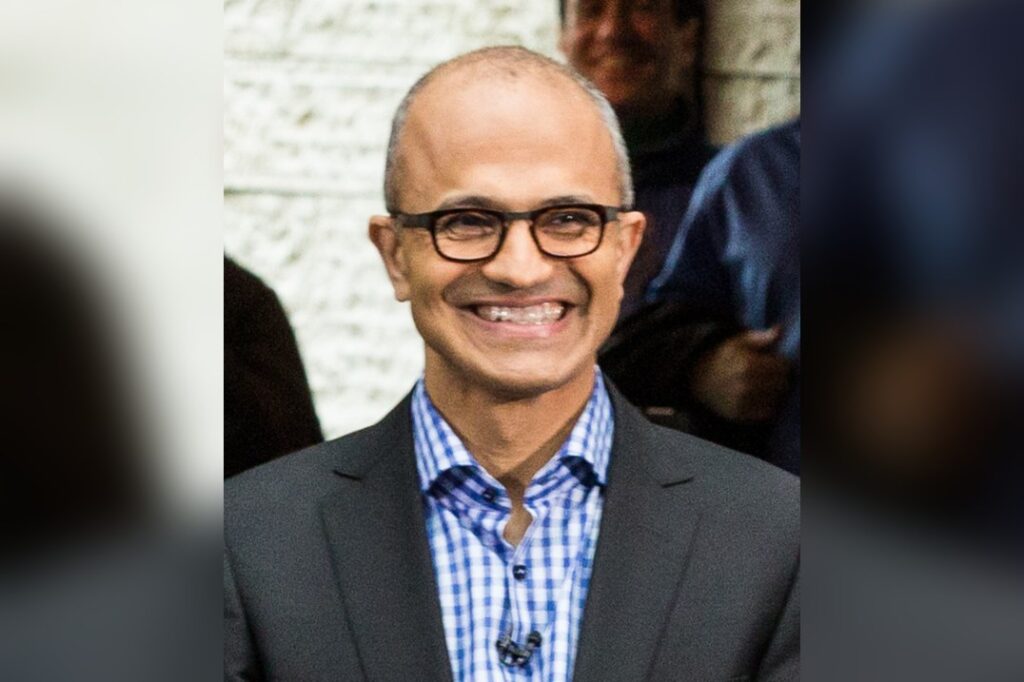
Satya Nadella’s vision is a big bet on small AI. The Microsoft CEO wants every business to build its own model, not rent one from Silicon Valley. That is the message he delivered in a recent interview with Yash Patil, co-founder of Applied Compute.
Now the question is: what does that actually look like in practice? Nadella sees a world where a regional hospital trains an AI on its own patient records.
A family-run logistics firm uses its delivery data to fine-tune a model. A local manufacturer builds a system around its factory floor knowledge. “My simple thing is there should be as many models in the world as firms in the world,” he said.
The logic is straightforward. Every company accumulates knowledge over time.
That knowledge is its real competitive edge. Nadella argues that AI should be an extension of that accumulated experience, not a generic tool from a handful of tech giants. “A firm is a learning system,” he said.
The next steps are already visible. Companies will need to decide which open-weight or fine-tuned models to adopt. They will need to figure out how to feed their proprietary data into those systems without leaking trade secrets or violating privacy laws.
That means investments in data infrastructure, security and internal expertise. None of it is cheap.
None of it is quick. Nadella warned against locking into a single frontier model developed by a small number of technology companies. “I don’t want to be locked into any one model,” he said.
“I want to be able to use my own context, my own data — in fact, my own traces to maybe even take a much more open-weight, cost-efficient model or a fine-tuned model.” That flexibility is key. Open-weight models are already proliferating.
Meta’s Llama, Mistral’s offerings and others give businesses a starting point. Fine-tuning those models on company-specific data is becoming easier. The cost is dropping.
The barriers are not technical anymore. They are organizational. For families and workers, the implications are concrete.
A local hospital might develop an AI that knows its own doctors, its own patient demographics, its own treatment outcomes. That could mean faster diagnoses or fewer administrative errors.
A regional manufacturer might build a system that tracks its own supply chain quirks. That could mean fewer delays or less waste. The timeline is uncertain.
Nadella did not give dates. But the direction is clear.
Companies that start now will have an advantage. Those that wait will be locked into somebody else’s model, paying for tools that do not fit their context. Microsoft is already positioning itself to supply the infrastructure.
Azure offers the compute power. The company has invested heavily in open-weight models and fine-tuning tools. Nadella’s vision aligns with his business.
But it also aligns with a broader shift in the industry. The era of one-size-fits-all AI is ending.
The era of bespoke models is beginning. The real test will be adoption. Small firms with thin margins may struggle to find the resources.
Large firms with complex operations may struggle to integrate new systems with old ones. Nadella is betting that the benefits outweigh the costs.
He is betting that every company can become a learning system. That is a big bet. It is also the only bet that makes sense if you believe that knowledge is the only real moat a business has.
{“@context”: “https://schema.org”, “@type”: “NewsArticle”, “headline”: “Nadella envisions businesses building, not renting, their own AI models”, “description”: “Satya Nadella’s vision is a big bet on small AI. The Microsoft CEO wants every business to build its own model, not rent one from…”, “datePublished”: “2026-06-29T12:09:03+00:00T09:30:00+00:00”, “author”: {“@type”: “Person”, “name”: “Erika Johnson”}, “publisher”: {“@type”: “Organization”, “name”: “InfoPulse Today”, “url”: “https://newsfeed.2bme.xyz/”}}




