
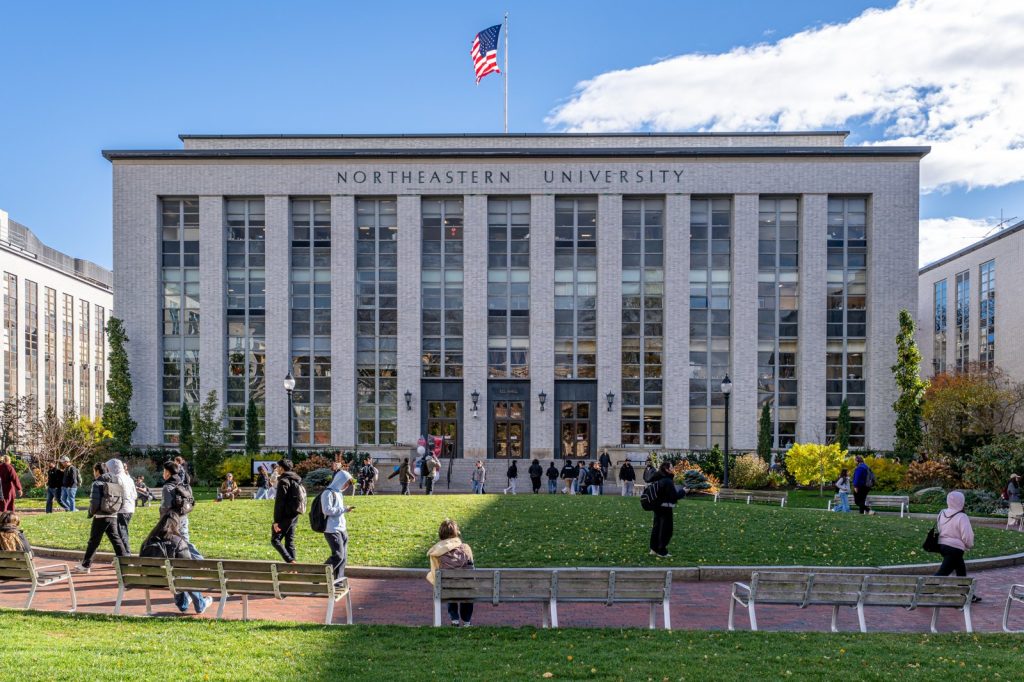
Boston, August 29 — Northeastern University has announced the restructuring of its undergraduate data science programs into integrated artificial intelligence majors, marking a decisive shift in how AI education is structured across disciplines. The change, rolled out at the start of the fall semester, rebrands existing data science tracks under broader AI-focused degrees that weave together machine learning, computational statistics, and domain-specific applications.
University leaders say the move responds directly to industry demand for professionals who can bridge technical AI tools with real-world problem solving in fields like healthcare, urban planning, and environmental science. By embedding AI literacy into traditional majors rather than siloing it in standalone programs, the university aims to prepare students for roles requiring both technical fluency and contextual understanding.
Provost James C. Hackney emphasized that the shift preserves academic rigor while expanding access to AI-integrated coursework. “This isn’t about replacing data science — it’s about expanding what it means to work with data in 2026,” he said in a statement released alongside the announcement.
The initiative builds on Northeastern’s prior investments in AI research infrastructure, including the 2023 launch of its Institute for Experiential AI, which partners with companies like IBM and Moderna on applied projects. Faculty across engineering, biology, and public policy will now co-teach courses under the new framework, blurring disciplinary boundaries in classrooms and research labs alike.
The restructuring reflects a broader trend among U.S. institutions grappling with AI’s rapid evolution and workforce transformation. With the federal government advancing AI governance frameworks and private sector investment surging, universities are reconfiguring curricula to meet employer expectations. Northeastern’s pivot stands out for its deliberate integration across departments rather than creating isolated AI degrees.
“We’re not training students to be AI technicians,” said Dean of Graduate Studies Maria L. Torres, who helped design the new pathways. “We’re training them to ask better questions — whether they’re modeling disease spread or optimizing public transit systems.” Experiential learning remains central to the model.
Students will still complete co-op placements where they apply AI tools to complex problems in industry or government. The university highlighted partnerships with Boston Medical Center and the Massachusetts Department of Transportation as early examples of how the new majors will operationalize interdisciplinary AI work.
“This is about creating graduates who can navigate ambiguity,” Torres added. “The practical upshot is that a biology major might now graduate having built predictive models for protein folding, while a policy student uses AI to simulate climate migration patterns.” University officials stressed that the change maintains existing faculty lines and program requirements while enhancing collaboration. No additional funding was disclosed, but internal reports indicate reallocated resources to support cross-departmental AI hubs.
The move aligns with Northeastern’s long-standing “learn by doing” philosophy, though it signals deeper integration of AI into the institution’s educational DNA. As other schools monitor its impact, the shift underscores a growing consensus: AI literacy is no longer a niche skill but a foundational competency across academic and professional landscapes.




