
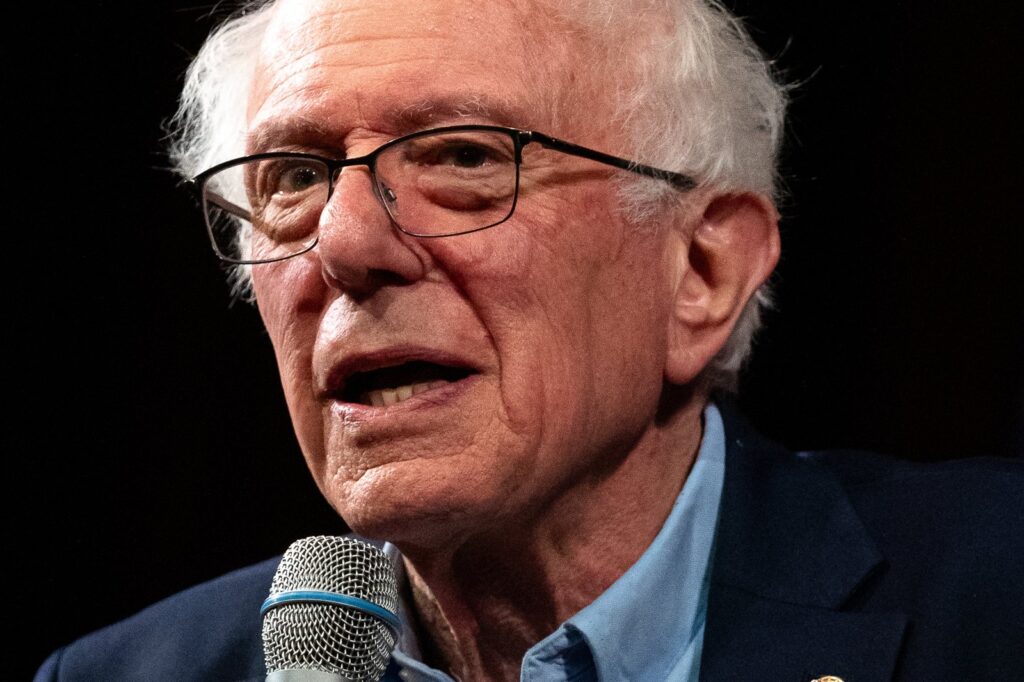
WASHINGTON, September 15 — Senator Bernie Sanders has a message for the companies racing to deploy artificial intelligence: if the technology is going to displace workers, the gains it produces should land in their paychecks and their calendars, not just in corporate earnings. The Vermont independent, who sought the Democratic presidential nomination in 2016 and 2020, has argued that AI-driven productivity gains should be shared with employees in the form of a four-day workweek.
He has not introduced a specific bill tying AI to a shorter week, according to this report, but his remarks put a prominent political voice behind proposals that link automation to reduced working hours. Here’s what it means in plain terms.
Think of AI as a new kind of machine on the factory floor — one that handles customer service tickets, writes software, routes logistics, and drafts content. When a machine does more of the work, the question becomes who keeps the time saved. Sanders says workers should.
A debate already running worldwide
The four-day workweek is not a thought experiment. In 2022, more than 60 UK companies and about 2,900 workers began a six-month pilot coordinated by the nonprofit 4 Day Week Global, the think tank Autonomy, and researchers at Boston College and the University of Cambridge. Most participating firms reported maintaining or improving productivity and chose to continue the policy.
Similar trials have run in Spain, Iceland, Japan, and New Zealand. In the United States, some employers have tested shorter schedules, and members of Congress have previously introduced legislation to reduce the standard workweek.
No federal law currently mandates a four-day week. The baseline most American workers know was set by the Fair Labor Standards Act of 1938, which established the 40-hour workweek standard. It has not been substantially shortened since.
Where the fight goes next
Critics contend that mandating a four-day week could raise costs for small businesses and reduce flexibility. Supporters argue that gains from technology should benefit workers. The debate intersects with ongoing policy discussions in Washington and in statehouses over AI regulation, worker retraining, and the tax treatment of automation.
Key figures in the broader conversation include economists studying productivity, labor unions such as the AFL-CIO, and technology executives whose companies are deploying AI at scale. Sanders has long championed workers’ rights, a $15 federal minimum wage, and Medicare for All.
His latest intervention places him at the center of a widening national debate over how the economic benefits of AI should be distributed as the technology automates tasks across industries including customer service, software development, logistics, and content creation. The story is developing. No formal legislative text or vote has been announced.
Watch for whether Congress, employers, and workers can agree on how to translate AI-driven efficiency into tangible changes in pay, hours, and job security.




