In 2021, a detector in the Utah desert blinked. Something had arrived from space carrying 240 exa-electron volts of energy. That is roughly the kinetic energy of a fast-moving tennis ball, but compressed into a single atomic nucleus. Scientists called it the Amaterasu particle. And for years, they could not figure out where it came from.
Now a study in Physical Review Letters offers a new explanation. The particle may not have been a proton at all. It could have been an atomic nucleus heavier than iron.
That changes everything.
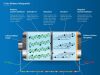
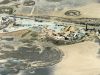
The Telescope Array, which spotted the particle, sits on the high desert floor west of Delta, Utah. It is an array of 507 scintillation detectors spread across 300 square miles. When an ultrahigh-energy cosmic ray hits Earth’s atmosphere, it triggers a cascade of secondary particles that rain down on the array. The detectors record the timing and energy of those particles. From that, physicists reconstruct the original cosmic ray’s direction and energy.
Amaterasu was one of the most energetic ever seen. But its arrival direction pointed into a vast cosmic void. No galaxy. No quasar. No known source. Just empty space.
That void became a problem. Protons are the most common cosmic rays, but they do not travel well over extreme distances. They interact with the cosmic microwave background radiation. They bump into it, lose energy, and get slowed down. After a few hundred million light-years, a proton from a distant source would arrive weak and tired. Amaterasu arrived anything but weak.
Heavy nuclei are different. They are bigger, tougher, and more resilient. They punch through that background radiation with far less energy loss. A nucleus of iron or something heavier can survive a journey of billions of light-years and still hit Earth’s atmosphere with most of its energy intact.
The researchers ran simulations. They modeled how protons would travel. Then they modeled how ultraheavy nuclei would travel. The difference was stark. The heavy nuclei made it. The protons did not.
That means the Amaterasu particle likely came from somewhere far beyond our local cosmic neighborhood. Maybe from a collapsing star. Maybe from a neutron-star merger. Maybe from a gamma-ray burst. All are extreme events that can forge heavy elements and fling them across the universe at near-light speed.
The void is no longer a problem. It is a clue.
This is not the first time cosmic rays have puzzled physicists. In 1962, a detector in New Mexico recorded a particle carrying 10^20 electron volts. The Fly’s Eye detector in Utah caught another in 1991, the so-called Oh-My-God particle, with 320 exa-electron volts. Those also appeared to come from empty regions of the sky. Scientists debated their origins for decades.
Amaterasu is the latest in that line. But this time, the simulations offer a way forward. If heavy nuclei are the answer, then the search for sources shifts. Astronomers should look not for the nearest active galaxies, but for the most violent events in the universe. Events that can forge elements beyond iron. Events that can accelerate those nuclei to energies that dwarf anything a human-made accelerator can produce.
The Large Hadron Collider at CERN pushes protons to about 6.5 tera-electron volts. Amaterasu carried 240 exa-electron volts. That is 240,000,000 tera-electron volts. The difference is not a matter of scale. It is a matter of kind.
The Telescope Array continues to run. It is being upgraded with additional detectors to capture more of these rare events. Each one carries a message from somewhere out there. Decoding that message means understanding not just the particle, but the engine that launched it.
If the heavy-nucleus interpretation holds, then Amaterasu is a messenger from a place no telescope can see. Not empty space. Not a void. Just very, very far away.