WASHINGTON, November 18, 2026 — The FBI issued a FLASH advisory Friday warning that cybercriminals and state-aligned hackers are exploiting ARTEX, an open-source AI-powered penetration testing framework, to automate intrusions across multiple sectors worldwide. The bureau said the tool can compress the timeline from initial targeting to privileged access to under three hours.
The Shift Is Automation at Scale
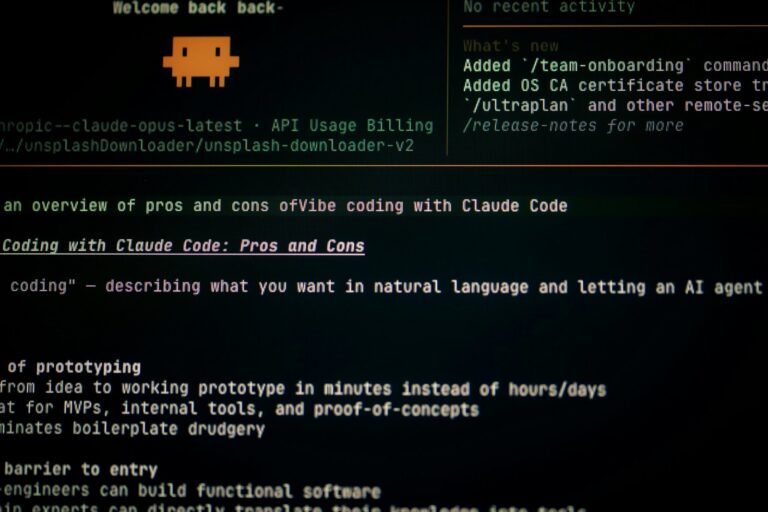
ARTEX is not a model itself. It is an autonomous framework written in Go that plugs into external large language models — Anthropic Claude, OpenAI GPT, DeepSeek, GLM, Grok, and Kimi — to run reconnaissance, vulnerability discovery, exploitation, privilege escalation, and data exfiltration with minimal human intervention. Operators feed objectives to the framework; specialized AI agents convert those goals into commands and execute them in parallel across multiple targets.
Analysis of attacker-controlled instances shows Chinese-origin models dominate, with the DeepSeek Flash family leading usage. The FBI attributed this to the models’ balance of capability, relatively low cost, and a lack of observable guardrails when framed for penetration testing tasks. Microsoft linked the observed activity to Storm-0940, a China-aligned threat group.
ConnectWise Supply-Chain Compromise
The advisory cites the October ConnectWise Cloud Backup supply-chain compromise as a primary example. Attackers used stolen backup credentials alongside ARTEX to attempt authentication against more than 2,250 downstream Microsoft 365 tenant environments. Because customers had already authorized the backup software, the intruders could leverage that trusted access without logging in as individual users. Microsoft recorded more than 151,000 failed sign-in attempts during a related campaign, peaking at 2,900 attempts per minute.
Sectors Hit and Confirmed Incidents
Threat actors have weaponized ARTEX since at least August 2026. Targeted sectors span financial services, government, technology, defense, healthcare, semiconductor, energy, manufacturing, telecommunications, and legal services. One campaign against South Korean financial institutions exposed the personal information of approximately 67,000 people. Impacted banks included Shinhan, KB Kookmin, Hana, BNK Busan Banks, Hyundai Capital, Yegaram Savings Bank, and Welcome Savings Bank.
Code Removed, Framework Persists
The original developer, known as Autumn-27, released ARTEX on GitHub in July 2026 and removed the public repository on October 8 after reports of malicious use surfaced. The FBI said the framework remains widely available through community forks, archived copies, localized versions, and a commercial edition called ARTEX PRO. Researchers had identified more than 1,600 publicly exposed ARTEX consoles as of early November, with actual deployments believed to be significantly higher.
Mitigation Steps for Defenders
The FBI urges organizations — particularly those operating internet-exposed applications, self-service portals, cloud infrastructure, and partner or supplier systems — to strengthen access controls, restrict administrative interfaces, review application permissions and authentication logs, implement rate limits on sensitive APIs, replace exposed credentials, and monitor for unusual bursts of automated requests, suspicious cloud activity, and unexpected credential or privilege changes. The bureau also seeks authentication records, API activity, cloud logs, and other evidence of ARTEX-related attacks.
Sources
- ARTEX AI Cyberattack: What is it? Why is FBI issuing warning about hacking?
- Hackers Are Using AI to Speed Through Cyberattacks, FBI Warns – CNET
- FBI warns ARTEX AI hacking tool is powering global cyberattacks
- FBI Says ARTEX AI Tool Helped Hackers Gain Privileged Access in Under 3 Hours
- FBI advisory warns AI-powered hacking tool could speed up cyberattacks
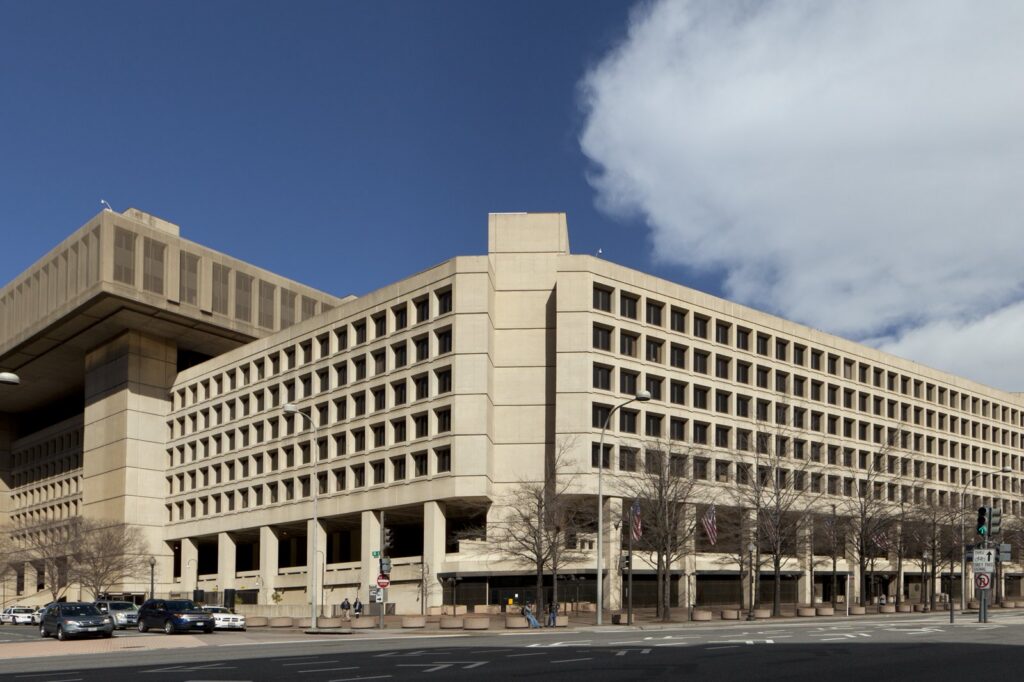
Photo: Carol M. Highsmith (Public domain)