KHARAGPUR, November 21, 2026 — Google committed $5 million to IIT Kharagpur today during the institute’s 75th Foundation Day celebrations, targeting Indic language models, materials science, agriculture, and a campus-wide GPU infrastructure upgrade. The multi-year grant structures funding across research, education, and compute capacity in a single linked agenda.
The Shift Is Structural: Three Pillars, One Compute Backbone
The grant splits across three core pillars that Google designed to feed each other. The advanced AI research pillar directs faculty toward four domain-specific problems: Indic natural language processing, materials discovery, precision agriculture, and scalable educational technology. The education pillar funds new AI curricula, pedagogical workshops, and hands-on training tracks for students, faculty, and teachers. The capacity-building pillar underwrites the AI frameworks, tooling, and technological environment across the 8.7-square-kilometre campus, effectively expanding the GPU clusters that power the research and the coursework alike.
Director Suman Chakraborty confirmed the grant emerged from collaborative planning between the institute and Google leadership. The funding provides untied institutional support for basic and applied AI capabilities rather than commercial product development, with disbursements channeled into university research laboratories, computational upgrades, and specialized academic programs.
Indic Languages First: Building on Amplify
The research focus on Indic languages extends a shift Google already started. In July 2025, the company brought its Amplify Initiative to India through IIT Kharagpur researchers, giving developers free access to structured, locally grounded datasets that reflect the country’s linguistic and cultural diversity. Amplify was designed as an open platform for community data collection, with datasets suitable for model fine-tuning and evaluation. The new grant doubles down on that approach: fixing the language gaps in large models by grounding them in Indian dialects and cultural context before they reach production.
Materials Science and Agriculture: The Applied Layer
Beyond language, the research pillar targets materials discovery and precision agriculture — two domains where India’s scale creates distinct data advantages. Faculty proposals will compete for funding to deploy applied AI methods on domain-specific challenges, from accelerating alloy design to optimizing crop yields across varied agro-climatic zones. Educational technology rounds out the quartet, aiming to scale personalized learning tools across the institute’s roughly 22,000 residents and beyond.
Pichai’s Alumni Signal: From Campus to Corporate Strategy
Google CEO Sundar Pichai, an IIT Kharagpur alumnus, framed the partnership around his own experience at the institute. “Looking forward to seeing this collaboration shape the path for the next generation of students, just as IIT Kharagpur shaped my own,” he said. Pichai connected the collaboration to India’s rising innovation profile and said programs like this would help implement Prime Minister Narendra Modi’s vision that the benefits of AI reach everyone in India. The grant was envisaged through Pichai’s direct involvement, according to Chakraborty’s remarks at the Platinum Jubilee event.
Model for the Ecosystem: Untied Capital, Open Compute
The structure — untied institutional grant, multi-year horizon, compute infrastructure open to the wider campus — sets a template for corporate-academic partnerships across Indian technical universities. Rather than earmarking funds for specific commercial outputs, Google placed capital at the faculty level and compute at the campus level. The ₹46 crore package supports university investigators across the four problem areas while underwriting open computational infrastructure for students and faculty alike.
What Comes Next: Faculty Proposals and Student Rollout
The institute will now open faculty proposal cycles for the research pillar, parallel to curriculum development workshops under the education pillar. Compute upgrades under the capacity-building pillar begin immediately, targeting campus-wide AI workloads. The first disbursements fund laboratory upgrades and specialized academic programs, with the multi-year horizon allowing iterative scaling based on early results.
Sources
- Google Funds IIT Kharagpur with $5M for Advanced AI Research
- IIT Kharagpur
- Google Commits $5M to IIT Kharagpur AI Research — CASRAI
- IIT Kharagpur alumni’s Unsiloed AI raises $7.5 million to make business documents AI-ready
- IIT Kharagpur Secures $5M From Google to Expand Campus AI Work
- Google's $5 Million Boost For IIT Kharagpur's AI Future
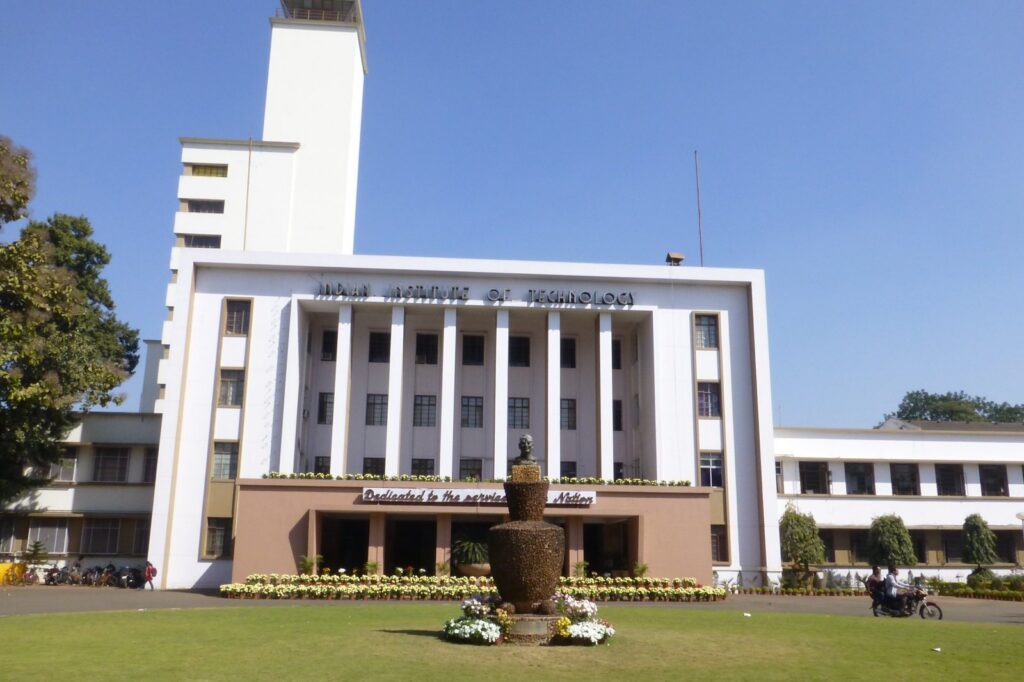
Photo: Shashwata Saha (CC BY-SA 4.0)