The shift is happening at the intersection of pattern recognition and formal logic. New Mexico State University has secured a two-year, $600,000 DARPA grant to build AI systems that can mathematically prove their own conclusions, the agency announced November 20.
The SPARTA Approach
The project, dubbed SPARTA (Splitting-based Polynomially-bounded Automated Reasoning with Tensorized Adaptation), targets a persistent gap in deployed AI. Machine learning models excel at pattern recognition but operate as black boxes; automated reasoning offers verifiable proofs but lacks the speed and flexibility of neural networks. The NMSU team aims to fuse them, creating outputs that can be checked against formal proofs without rendering the computation impractical.
“Integrating these branches of artificial intelligence will provide the speed and flexibility of machine learning with verifiability based on artificial reasoning proofs that have strong logical explainability and computational tractability,” said Son Tran, NMSU computer science professor and department head, who leads the effort alongside assistant professor Stylianos Vasileiou.
Inside the CLARA Program
The award sits inside DARPA’s CLARA program — Compositional Learning-And-Reasoning for Automated Complex Systems Engineering. CLARA funds foundational research into tightly integrating learning and reasoning components to create machine intelligence with stronger reliability assurances for high-stakes systems. NMSU is one of 10 research teams nationwide receiving awards through this cycle.
The Defense Advanced Research Projects Agency, created in 1958 in response to Sputnik, has a track record of seeding technologies that later define civilian infrastructure — GPS, the internet, and mRNA vaccine platforms among them. CLARA continues that mandate: fund the hard math now so the systems later can be trusted in environments where failure isn’t an option.
Collaboration Across Three Universities
NMSU isn’t working in isolation. The project pulls in a group led by Chitta Baral at Arizona State University and another led by Yuliana Lierler and Jorge Fandinno at the University of Nebraska at Omaha. The collaboration reflects the CLARA program’s emphasis on compositional methods — reusable, verifiable building blocks that can be assembled into larger, assured systems.
The work remains in the research phase. Verifiable explanations and reusable methods are stated goals, not demonstrated results. The team’s challenge is making verification both scalable and applicable across different problem domains — a prerequisite for any future deployment in defense or critical infrastructure.
What’s Changing
The trend underneath this award is a move away from “trust me” AI toward “prove it” AI. As autonomous systems migrate into contested, GPS-denied environments — like the ground robots DARPA tested at Fort Knox last month — the ability to audit a machine’s reasoning becomes operational necessity, not academic preference. Watch this space: the SPARTA team’s two-year clock started in November 2026.
Sources
- DARPA
- Proposers Day: Altered B
- Poovathingal among 7 selected for DARPA YFA Director’s Fellowship
- Everforth ECS Awarded $163M Contract Supporting DARPA MXO
- The Pentagon is testing war robots that can hunt in packs without GPS and find battlefield targets on their own. Humans still call the shots.
- NMSU wins $600,000 DARPA grant to develop AI that can show its reasoning
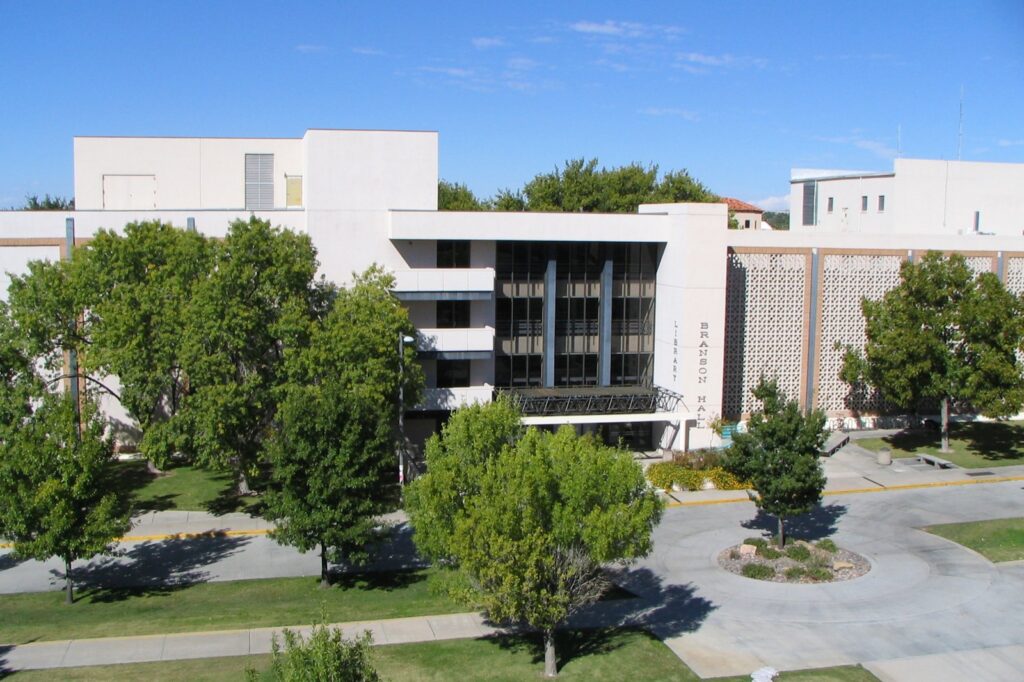
Photo: Terry Umbenhaur (CC BY-SA 3.0)