
Governments that want to use artificial intelligence without handing their data to foreign companies now have a clear price tag for that independence: at least $260 million in venture capital, plus a $3 billion valuation. That is what Dream, a three-year-old Israeli-European company, just raised. The round was co-led by Bicycle Capital and Group 11.
Antler, Bain Capital Ventures, and Tru Arrow Partners also joined. The money is meant to build what Dream calls sovereign AI — systems designed to run inside government-controlled environments, not on servers owned by American or Chinese tech giants.
Dream has been selling this idea since late 2024. It already holds nearly $300 million in total contract value. That number matters.
It means governments are not just talking about sovereign AI. They are buying it.
The company builds both artificial intelligence and cyber-defense systems. Its target customers are governments and critical infrastructure operators. The pitch is straightforward: if your nation’s data and decision-making depend on a foreign cloud provider, you do not truly control your own security or your own future.
Sebastian Kurz, Dream’s president and co-founder, put it bluntly. Governments, he said, have moved past the question of whether to use AI. The real question now is how to maintain control over it.
He called sovereign AI a foundation for national resilience and competitiveness. Kurz and co-founder Shalev Hulio started Dream with a simple observation: AI would change how cyber attacks work.
They built a company to address that. Kurz said nations that use AI will become supernations. He compared it to nuclear power.
In the past, a nation was a super nation if it had nuclear weapons. In the future, he argued, the key will be cyber, quantum, and AI.
That is a big claim. But investors appear to believe it. The money was announced June 18 from Tel Aviv.
Dream is structured as a European-Israeli company. Kurz, a former Austrian chancellor, emphasized that Europe is behind in the AI sovereignty race. He said that is exactly why a company like Dream can contribute — because it can offer technology that lets other nations catch up without becoming dependent on the United States or China.
Kurz said the United States and China are leading. Other countries need the technology but do not want to be locked into foreign systems.
Dream’s model is meant to offer a third path. Hulio, the CEO, described the rise of AI as a shift comparable to earlier technological eras. He did not specify which ones, but the implication was clear: this is not a marginal change.
It is a structural one. The funding round pushes Dream to a $3 billion valuation.
That is a high number for a company that only started commercial operations last year. But the contract value — nearly $300 million already — suggests revenue is following the hype. Dream’s approach is not about building general-purpose AI chatbots.
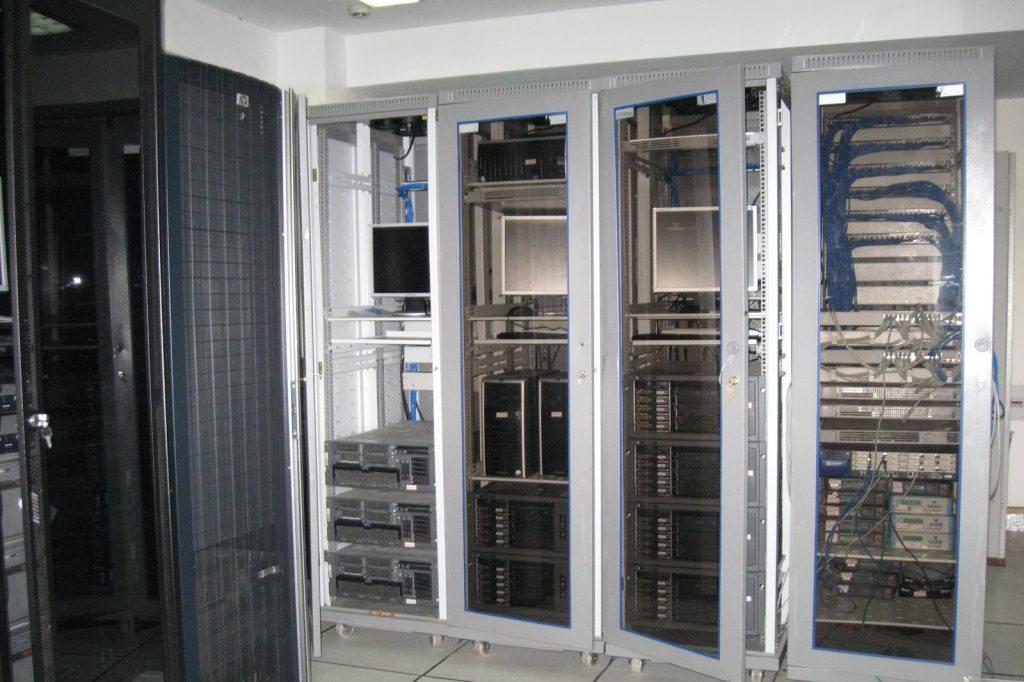
It is about building systems that governments can own outright. The data stays inside the country. The models run on government-controlled infrastructure.
The foreign vendor does not get access to sensitive information. That is the sovereign AI pitch.
It is a bet that nationalism and technology will merge. Governments want the power of AI. They just do not want to pay for it with their sovereignty.
Dream is now one of the best-funded companies in that space. Whether it can deliver on the promise — and whether governments will actually use the systems — is the question the next few years will answer.
Sources
- Dream Raises $260M and Reveals Its Sovereign AI for Nations
- Dream Raises $260M, Reveals Sovereign AI for Nations




