
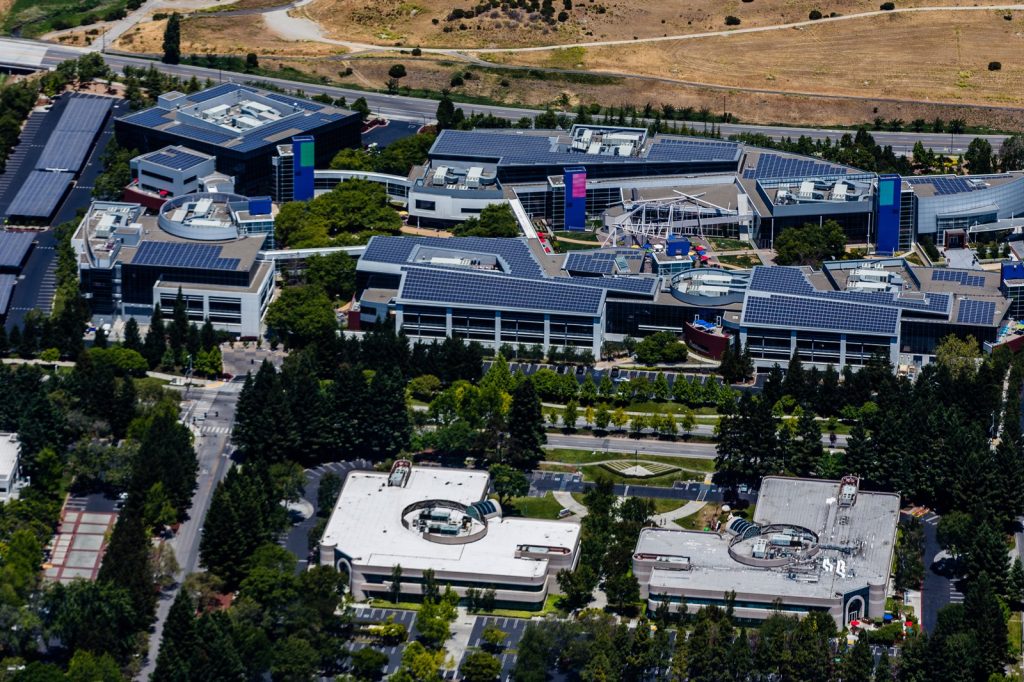
MOUNTAIN VIEW, July 13 — In the corridors of artificial intelligence research, a quiet revolution began nearly a decade ago with a paper titled ‘Attention Is All You Need’. Published in 2017 by Vaswani and colleagues at Google Brain, the transformer architecture did not merely improve machine translation; it fundamentally redrew the map of what neural networks could achieve.
The core innovation was a self-attention mechanism that allowed the model to process entire sequences in parallel, rather than step by step as recurrent neural networks and long short-term memory models had done. This shift from sequential to parallel processing was, against this backdrop of growing data volumes, a breakthrough that reduced training time from weeks to days when running on specialised hardware such as TPUs and GPUs.
The paper itself reported state-of-the-art BLEU scores on the WMT 2014 benchmarks: 28.4 for English-to-German translation and 41.8 for English-to-French. Those numbers, while technical, signalled that a new architecture had arrived. What is at stake here is not just better translation software but the entire trajectory of large-scale language modelling.
From translation to foundation models
Google built on the transformer architecture to release BERT in 2018, a model with 340 million parameters that set new standards for understanding context in natural language. That same year, OpenAI began its own transformer-based work, launching the GPT series. The architecture proved remarkably scalable.
By 2020, GPT-3 employed 96 transformer layers and 175 billion parameters, trained on 570 gigabytes of text data. The wider picture is that transformers became the indispensable backbone of modern natural language processing.
The elegance of the design lies in its components: multi-head attention, which lets the model focus on different parts of the input simultaneously; positional encoding, which preserves the order of words without recurrence; and feed-forward layers that process the attended information. This architecture replaced the older RNN and LSTM approaches across most major applications.
European perspective on a global shift
For European research institutions and technology firms, the transformer’s rise has been both an opportunity and a challenge. The architecture is open in its foundational paper, yet the resources required to train models at the scale of GPT-3 — weeks on specialised hardware, vast datasets — concentrate capability in a handful of well-funded laboratories. European consortia have responded by pooling computational resources and developing their own transformer-based models, seeking to remain competitive in a field increasingly defined by scale.
Looking ahead, the transformer architecture continues to evolve. Researchers are exploring more efficient attention mechanisms, ways to reduce the memory footprint of large models, and new training regimes that could bring state-of-the-art performance within reach of smaller teams.
The paper that started it all, ‘Attention Is All You Need’, remains one of the most cited in the field, and its influence shows no sign of waning.




