
AUSTIN, July 31 — Analysts now project the global artificial intelligence market will reach an estimated $1.8 trillion by 2030, a compound annual growth rate of 37 percent from its current valuation. The forecast lands as investment in the sector accelerates at a clip that has economists and market observers split between confidence in the technology and memories of the last great speculative run.
The boom is broad. The record shows adoption spreading across healthcare, finance, manufacturing and consumer technology, driven by advances in large language models, generative AI and machine learning. What began as a niche computing discipline has become the scaffolding for a wave of corporate spending, with cloud providers competing to build the infrastructure underneath it.
Infrastructure First
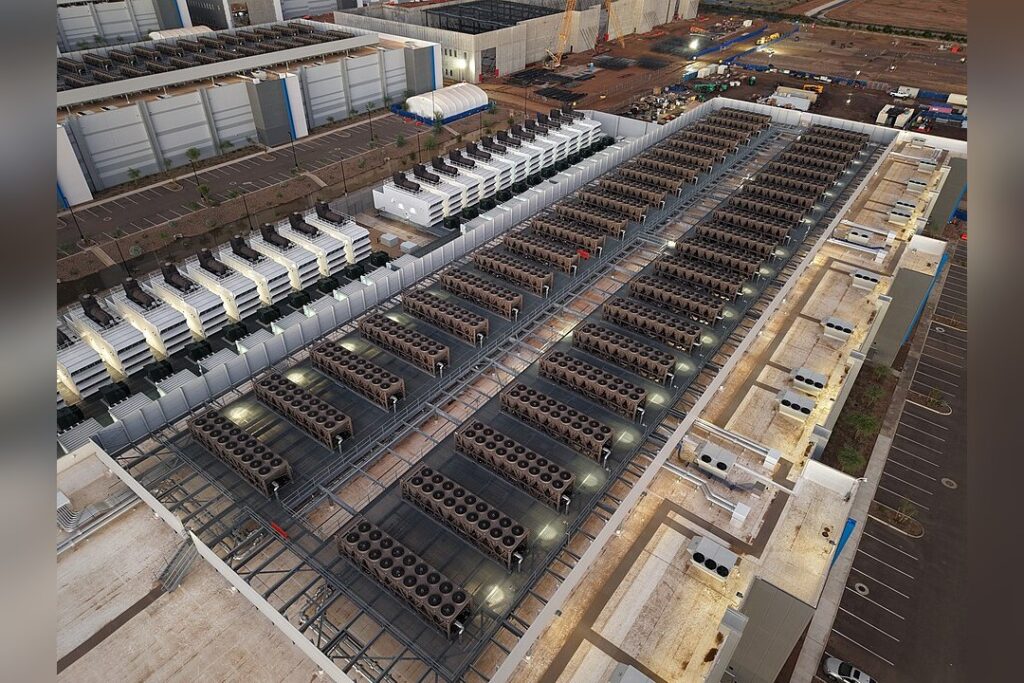
Oracle has placed a large bet on that infrastructure. The company’s cloud infrastructure unit, Oracle Cloud Infrastructure, posted revenue of $1.8 billion in the third quarter of fiscal 2024, a 49 percent increase that the company attributes to intense demand for AI-specific cloud capacity. The number is one data point on a timeline that has seen Oracle commit billions to data center construction, positioning itself as a supplier of the raw computing power AI models require.
Larry Ellison, Oracle’s co-founder, chairman and chief technology officer, has acknowledged the transformative potential of the technology while stressing the importance of foundational infrastructure. The message from the company has been consistent: the models get the attention, but the data centers do the work.
The scale of spending raises a practical question. Capital in the billions is now flowing into physical plant — land, power, cooling, networking — on the assumption that AI demand will keep growing for years. If that assumption holds, early movers in cloud infrastructure stand to collect. If it cracks, the expense is sunk.
The Dot-Com Precedent
Concerns about a possible AI bubble are circulating among economists and market observers, who increasingly draw parallels to the dot-com frenzy of 2000. Then, overvaluation of internet companies led to a significant market correction. The comparison is not exact, and the analysts making it tend to say so.
The underlying technology and applications of AI are considered more robust than many dot-com era ventures, which often lacked revenue, profit or a clear path to either. That distinction matters. But the speed and scale of current investment, coupled with high valuations for some AI startups, raise questions about sustainability that a strong product demo does not answer.
On the timeline, the pattern is familiar: a transformative technology, a wave of entrants, and capital chasing the next big name. The difference now is the size of the checks. Data center commitments alone run into the billions for a single company, and the AI market’s projected trajectory assumes those commitments keep paying off.
What to Watch
The market’s current trajectory suggests continued expansion, but investors are watching for signs of overheating. The indicators they cite are specific: unsustainable revenue multiples, or a widening disconnect between company valuations and tangible profits. A startup valued on promise rather than earnings is not a problem by itself. A market full of them, at current price levels, is the classic setup for a correction.
The dot-com precedent is a caution, not a prophecy. Many internet companies of that era failed, but the internet itself remade the economy. The same could be said of AI: the sector may consolidate, and some high-flying valuations may come down, while the underlying technology continues its spread into everyday commercial use.
The coming quarters will show which way the balance tips. Revenue reports from cloud providers like Oracle offer a useful read on real demand — money spent on actual computing capacity rather than equity paper. Sustained growth there would support the optimists’ case. A slowdown, or a string of startups missing their numbers, would feed the skeptics.
For now, the forecast stands at $1.8 trillion by 2030. The number is an estimate, not a certainty. But the spending behind it is real, and so is the risk attached to it.
{“@context”: “https://schema.org”, “@type”: “NewsArticle”, “headline”: “AI Market to Hit $1.8 Trillion by 2030, Bubble Risks Loom”, “description”: “AUSTIN, July 31 — Analysts now project the global artificial intelligence market will reach an estimated $1.8 trillion by 2030, a compound annual growth rate…”, “datePublished”: “2026-07-31T09:30:00+00:00”, “author”: {“@type”: “Person”, “name”: “Ariel Antonio”}, “publisher”: {“@type”: “Organization”, “name”: “InfoPulse Today”, “url”: “https://newsfeed.infopulsetoday.com/”}}




