
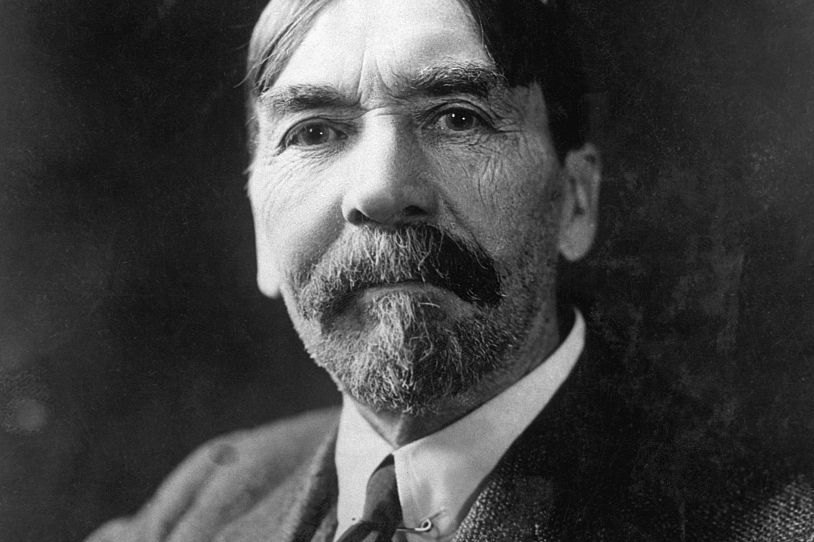
WASHINGTON, July 20 — The debate over whether artificial intelligence is an unstoppable force that society must simply accept has deep roots in a century-old theory: technological determinism. As policymakers, corporate executives, and international bodies grapple with the rapid deployment of AI systems, the underlying assumption that technology follows its own logic and dictates social change is being scrutinised with new urgency. The term technological determinism is believed to have originated with Thorstein Veblen, an American sociologist and economist who lived from 1857 to 1929.
Veblen argued that the development and use of machinery exert an independent influence on human thought and behaviour. He asserted that “the machine throws out anthropomorphic habits of thought.” His ideas crystallised during the rapid industrialisation of the United States, a period in which innovations such as the assembly line and the railroad demonstrated technology’s power to reshape economic and social structures.
Strategically, the theory frames technology as an autonomous driver of history. Karl Marx also influenced technological determinism, arguing that technology drives historical change by shaping the “material base” of society. Marx cited the railway in colonial India as a potential force for challenging the caste system — a concrete example of what the theory posits: that technological progress can determine social progress.
Evolution of the concept
Clarence Ayres, a 20th-century economist and follower of both Veblen and John Dewey, expanded the concept by introducing “technological drag.” In Ayres’s formulation, technology progresses as a dynamic, self-generating force while traditional institutions lag and resist change. This idea of a lag between technological advancement and social adaptation was further developed by William Ogburn, another radical technological determinist, who formulated the theory of “cultural lag.” The broader stakes of these ideas are captured in several definitions that have emerged over time.
Merritt Roe Smith defined technological determinism as “the belief in technology as a key governing force in society.” Bruce Bimber described it as “the idea that technological development determines social change.” Rosalind H. Williams put it in logical terms: “technology determines history.” The theory presumes that technology dictates users’ behaviours and, crucially, that “technological progress equals social progress.”
Contemporary resonance in AI discourse
Today, these deterministic assumptions are applied directly to artificial intelligence. Proponents argue that AI progress is inevitable and must be accepted uncritically — echoing the deterministic views from a century ago. This framing is not neutral; it carries geopolitical weight.
If AI determines the course of history, then nations that lag in AI development are not merely behind but are structurally disadvantaged. The theory also has adherents among “hyperglobalists,” who claim that wide availability of technology makes accelerated globalisation inevitable.
In the realm of international development aid, technological determinism is a common ideology: aid programs often assume that transferring modern technology to developing countries will drive social progress, without sufficient attention to local institutions or cultural resistance — precisely the dynamic that Ayres’s concept of technological drag would predict. For those on the International Conflict/Politics desk, what this signals is a return to deterministic thinking at a moment when the stakes are higher than ever.
The calculus for defence planners and trade negotiators now includes the assumption that AI will follow its own efficient logic, irrespective of national borders or political will. The broader stakes involve whether societies can still shape their own technological trajectories — or whether they are, as the theory would have it, passengers on a train with no brakes.
Looking ahead, the debate will likely intensify as governments weigh regulation against the deterministic narrative that AI progress is unstoppable. The history of the theory, from Veblen’s original insight through Ayres’s drag and Ogburn’s lag, provides a sobering reminder: the assumption that technology dictates social structure has been challenged before, but it has never disappeared. The question now is whether the current wave of artificial intelligence will finally break the hold of that century-old determinism — or reinforce it.




