
Investment Surge Driven by Hardware and Algorithmic Advances
The origins of today’s AI expansion trace back decades. Artificial intelligence emerged as a formal academic discipline in 1956, when researchers at Dartmouth College began investigating whether machines could learn and solve problems like humans. Early work focused on symbolic reasoning and rule-based systems, but progress stalled during periods known as AI winters—times when funding dried up after unmet expectations.
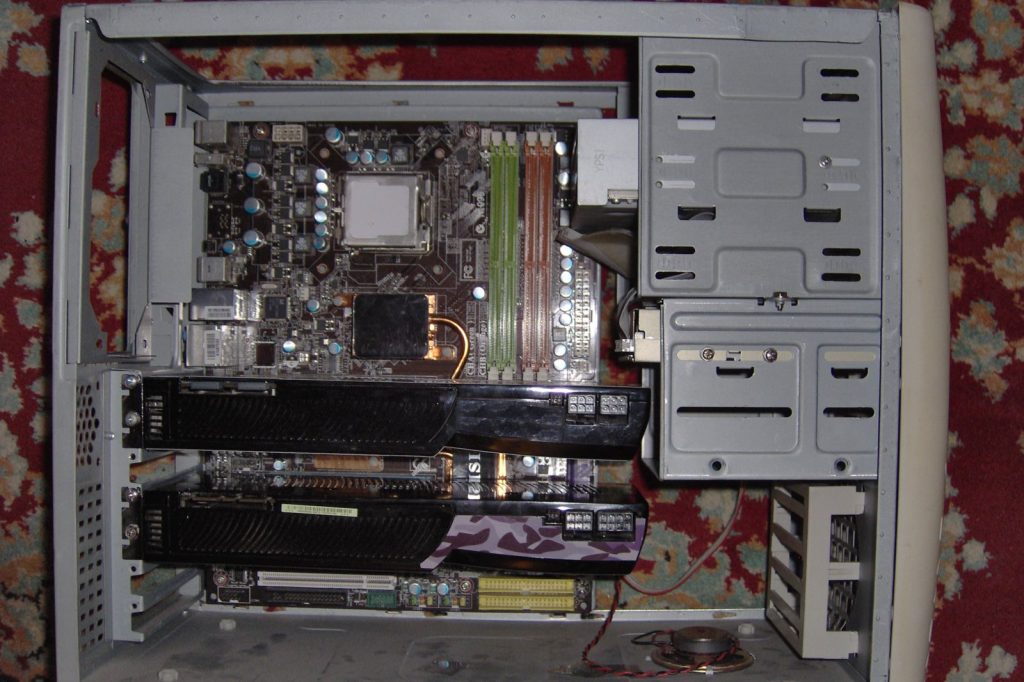
The field revived in the 2010s, driven by improvements in graphics processing units that allowed neural networks to train much faster. Breakthroughs in deep learning outperformed older techniques, and a second wave arrived after 2017 with the transformer architecture, which enabled more efficient processing of language and data. By the 2020s, generative AI systems could create text, images, and audio from simple prompts, expanding the reach of the technology far beyond academic labs.
The current boom reflects a convergence of hardware advances, algorithmic improvements, and the availability of vast datasets. Major technology firms have invested heavily in both research and deployment. AI now underpins automation in industries ranging from manufacturing to finance, while also powering everyday tools such as web search, recommendation systems, and voice assistants.
Economic Promise and Workforce Disruption
The economic potential of AI is substantial. A 2024 report from McKinsey estimated that AI could contribute up to $4.4 trillion annually to the global economy by 2030. That projection covers contributions across a range of industries and job types, not just technology roles.
But the same report warned that up to 375 million workers worldwide may need to switch occupations by 2030 due to automation driven by AI. This potential disruption spans multiple sectors, and the transition poses challenges for workers, companies, and governments.
In the United States, the AI industry employed roughly 1.2 million people in 2024, according to the Bureau of Labor Statistics. That figure represents direct employment in AI-related roles and excludes the broader economic activity generated by the sector.
The gap between the projected economic contribution of AI and the number of workers who may need to change jobs is likely to shape policy debates in the coming years. Governments and companies are still working out how to manage the transition. The 2026 spending figures from the International Data Corporation will offer one measure of whether investment is keeping pace with the technology’s spread.
As AI systems become more capable, they increasingly influence daily life—shaping how information is accessed, how decisions are made, and even how creative work is produced. The current phase of rapid development has intensified debates over regulation, safety, and the balance between innovation and oversight. The core technology—computer systems that perform tasks associated with human learning, reasoning, perception, and decision-making—continues to evolve, drawing on methods from mathematics, engineering, and computer science. Neural networks, statistical models, and logic all play a role. The path from Dartmouth to today’s data centers and cloud services has been long and uneven, but the economic and social impact of AI is now measurable and growing.
{“@context”: “https://schema.org”, “@type”: “NewsArticle”, “headline”: “AI Investment Surge Fueled by Hardware and Algorithmic Advances”, “description”: “Investment Surge Driven by Hardware and Algorithmic Advances The origins of today’s AI expansion trace back decades. Artificial intelligence emerged as a formal academic discipline…”, “datePublished”: “2026-07-14T09:30:00+00:00”, “author”: {“@type”: “Person”, “name”: “Reza Karimi”}, “publisher”: {“@type”: “Organization”, “name”: “InfoPulse Today”, “url”: “https://newsfeed.infopulsetoday.com/”}}




