
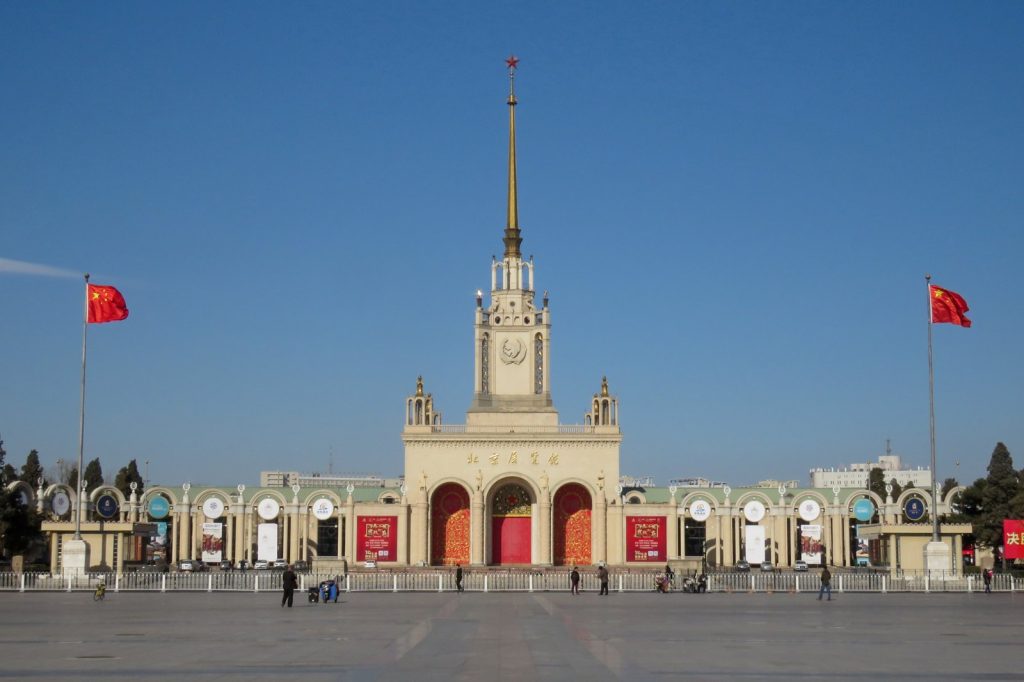
BEIJING — The robots are new. So is the artificial intelligence zone. But the message at this year’s China International Supply Chain Expo is old-fashioned: trade works when countries talk.
The fourth edition of the expo opened this week in Beijing, drawing exhibitors and participants from numerous countries, regions, and international organizations. Organizers say it runs through Friday.
For the first time, a dedicated AI exhibition zone has been set up, a sign that technology is reshaping how supply chains function — and who controls them. The timing is no accident. Protectionism is rising.
Economic fragmentation is real. Global supply chains, after years of pandemic shock and geopolitical strain, are under pressure.
Against that backdrop, China is using the expo to make a case: that its industrial base, its consumer market, and its push into frontier technologies make it a stabilizing force. Officials at the expo said countries worldwide stand to benefit from China’s role in holding supply chains together. They pointed to the country’s comprehensive industrial foundation and its vast domestic market.
They also cited advances in technology and a business environment they described as increasingly friendly to foreign firms. This is not a new argument from Beijing. But the setting gives it weight.
The expo has become a regular meeting point for governments and businesses to discuss cooperation. Data released by organizers shows the event has grown into a significant platform for connecting supply and demand across borders.
The AI zone is the most obvious symbol of change. It signals that the next phase of global supply chains will be shaped by automation, data, and machine learning. China wants to be at the center of that shift, not just as a manufacturer but as a developer of the technology that runs the networks.
Still, the underlying pitch is the same one China has made for years: open markets, diversified sourcing, and international collaboration are better than walls and tariffs. The expo is a showcase for that philosophy.
A sharp rise in protectionism has complicated international trade. The organizers acknowledged that directly. They framed the expo as a counterweight — a place where companies and countries can find partners, not just competitors.
Geopolitical uncertainty was the unspoken guest at every booth. The war in Ukraine, tensions over Taiwan, and the ongoing technology rivalry between the United States and China have all made supply chain planning harder. Companies want reliability.
Governments want security. The expo is an attempt to offer both, at least in part.
China’s argument is that its size and stability make it indispensable. Its industrial base is deep. Its consumer market is huge.
Its investment in technology is accelerating. For many companies, the math still works in Beijing’s favor.
The expo runs through Friday. More than 600 exhibitors are expected, according to earlier reports from state media. The AI zone is drawing particular attention from foreign delegations.
Whether the expo changes minds is an open question. But it does one thing clearly: it puts China at the center of a conversation the world cannot afford to ignore. Supply chains are the arteries of the global economy.
When they clog, everyone feels it. The expo is Beijing’s answer to the problem — a call for cooperation, backed by the country’s economic weight.




