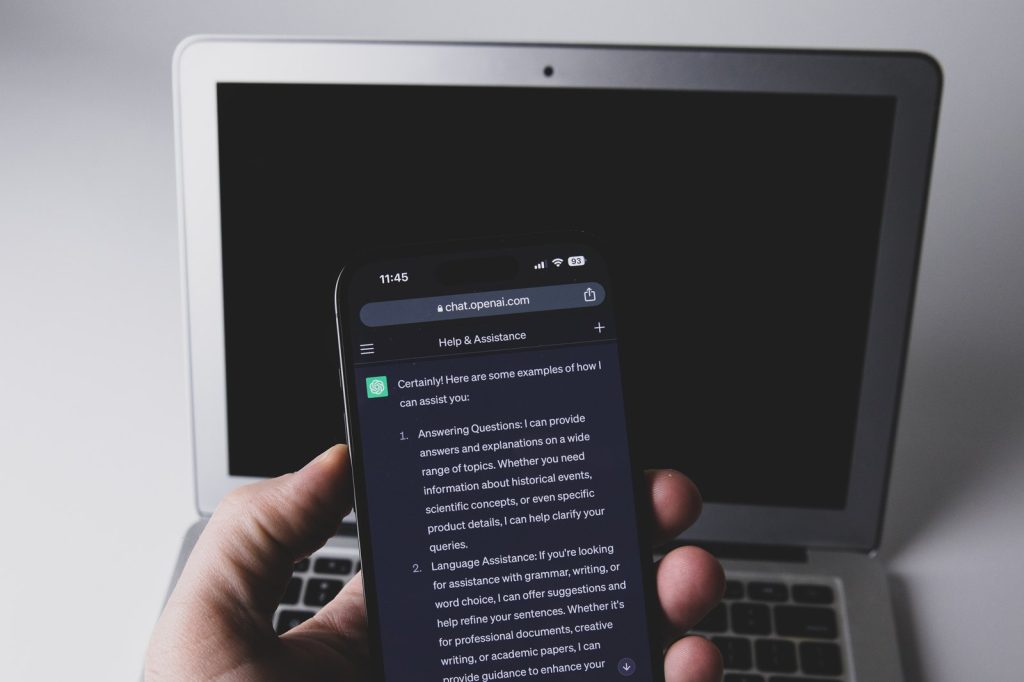
Since its release on November 30, 2022, by the research company OpenAI, ChatGPT has become one of the fastest-growing consumer applications ever, accelerating what is now called the AI boom—a surge of investment, public fascination, and workplace experimentation. At its core, the generative artificial intelligence chatbot uses large language models, specifically a type of neural network called a generative pre-trained transformer, to produce text, speech, and images in response to user prompts. Users interact with it through conversational exchanges, typing questions or commands and receiving human-like replies.
Yet a new analysis by Ben Patterson, writing for a technology publication, offers a grounded perspective for those who rely on these tools. Patterson’s observation is straightforward: the AI can carry a user most of the way, but the final stretch demands the kind of judgment and context that machines simply do not possess.
The AI-generated output often looks polished on the surface—sentences flow, structure holds together, tone feels right. But closer inspection usually reveals gaps: missing nuance, a fact that is almost correct but not quite, or a perspective that does not quite fit the audience. Fixing those gaps, Patterson argues, is where the human touch becomes indispensable.
The Human Work Beyond the Draft
Patterson does not suggest that AI tools are overhyped; far from it. His argument is more practical: treat the AI as a powerful first draft generator, not as a finished product. For families and small business owners across the Philippines and the wider region who are increasingly using these tools for everything from school assignments to business proposals, the lesson is about knowing when to step in.
The AI can handle the heavy lifting of getting words on the page. But the editing, the fact-checking, the tailoring to a specific audience—that remains very much a human responsibility.
This observation carries particular weight given the broader context of ChatGPT’s impact. The chatbot has sparked wide debate about the nature of creativity and the future of knowledge work. Supporters see it as a tool that can transform many professional fields by handling routine writing and analysis. Critics point to serious flaws: it can produce plausible-sounding but incorrect answers, reflect biases from its training data, and be used for academic dishonesty or generating misinformation.
The ethics of training such models on copyrighted material have also drawn sharp controversy.
Understanding AI’s Limits and Strengths
For people using ChatGPT today, the practical takeaway is increasingly clear. The technology can generate polished-looking first drafts quickly, but it lacks the judgment, context, and nuance that human work requires. That gap is not a bug—it is a fundamental characteristic of the current generation of AI.
Patterson’s analysis suggests that the most effective users are those who understand where the AI’s abilities end and their own must begin. Understanding where the machine stops and the human must begin is becoming a basic skill for students, small business owners, and anyone relying on these tools to save time.
What this means for communities in the Philippines and across Asia is a shift in how people think about productivity. The heavy lifting of getting words on the page has become surprisingly easy. The hard part—the remaining portion that turns a decent draft into something truly usable—still belongs entirely to the human.
Getting to that first portion has become surprisingly easy, but the real work only begins once the AI stops typing. For anyone who has ever stared at a ChatGPT response and felt that something was just slightly off, Patterson’s message is reassuring.
That feeling is not a flaw in the tool. It is the signal that the real work is about to start. The shortcut is not the whole journey.
For small business owners drafting proposals or students working on assignments, the reminder is that the AI can get them most of the way, but the final stretch demands the kind of judgment and context that machines simply do not possess.