
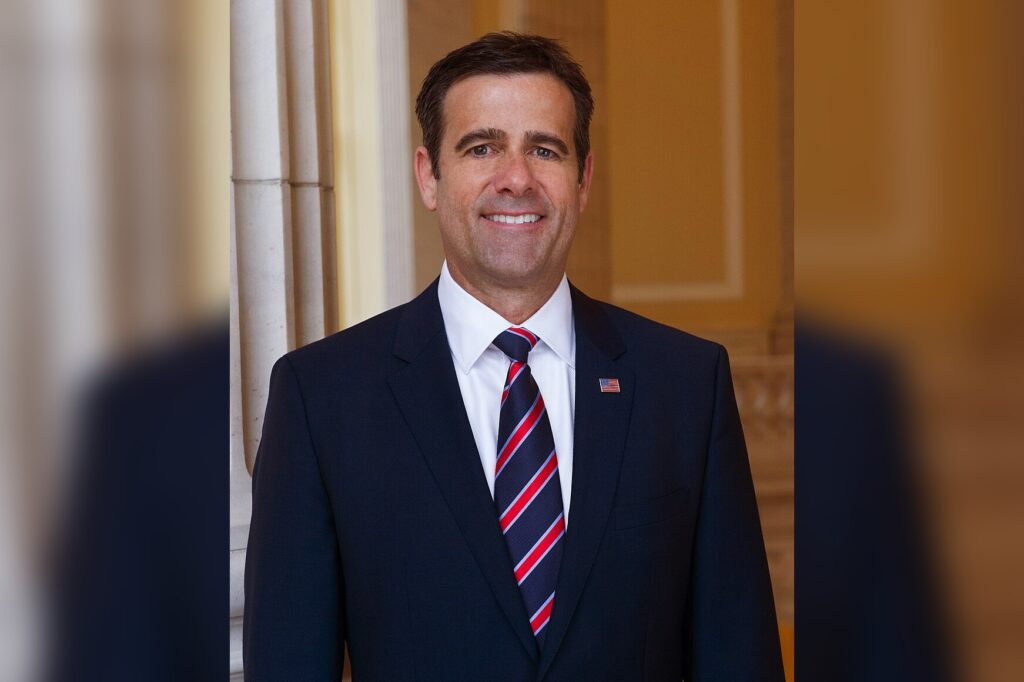
WASHINGTON, October 5 — In a move that has drawn criticism from Democratic Senator Elizabeth Warren, President Donald Trump has named the director of national intelligence, John Ratcliffe, as the head of a new taskforce on Artificial Intelligence (AI). The taskforce, which aims to coordinate government engagement with consumers, companies, and religious organizations, will also include Andrew Ferguson, head of the Federal Trade Commission, and Emil Michael, undersecretary of defense for research and engineering.
The taskforce, which Trump has unilaterally rebranded as the ‘Super Intelligence Force’, will report directly to the President and White House Chief of Staff Susie Wiles. Trump has pushed back against any kind of slowdown on AI development, stating that the US is leading the race ahead of China.
Last week, the president and the heads of major AI firms signed a ‘morally binding’ document, making them responsible for ensuring the safety of their own technology.
Trump, who is attempting to rebrand AI as ‘super intelligence’, wrote on social media: ‘The Super Intelligence Force will coordinate the Federal Government’s engagement with Consumers, Public Interest Groups, Religious Organizations, Critical Infrastructure Providers, and Super Intelligence Companies.’ The announcement of the taskforce follows growing pressure from prominent figures in the industry, including executives of OpenAI and Anthropic, to tighten regulation of the technology.
Trump first announced the taskforce in September, prompting Warren to state: ‘Congress cannot meet the pressing threat of AI by just forming another committee or continuing to have drawn-out discussions about it.’ She added: ‘Let’s actually pass some meaningful regulations on AI to protect people.’ In an interview published on October 4, OpenAI chief executive Sam Altman said the benefits of AI justify accepting some of its risks and argued that the technology should remain accessible to the public.
Trump recently travelled to China for a state visit, but ruled out a joint venture between the US and China to develop AI. ‘If we do that, we’re going to be giving a lot of secrets that they [China] would want to have, or anybody else,’ he said. The US President has been vocal about the need for the US to maintain its lead in AI technology.
The taskforce’s creation comes as the US administration continues to grapple with the broader stakes of AI development, with some experts warning of potential risks to humanity. However, Trump has rejected the idea of laws to control development of the technology.
What this signals for the future of AI regulation remains to be seen, as the calculus of power plays out on the geopolitical chessboard.




