The Architecture Of Private AI In Regulated Industries
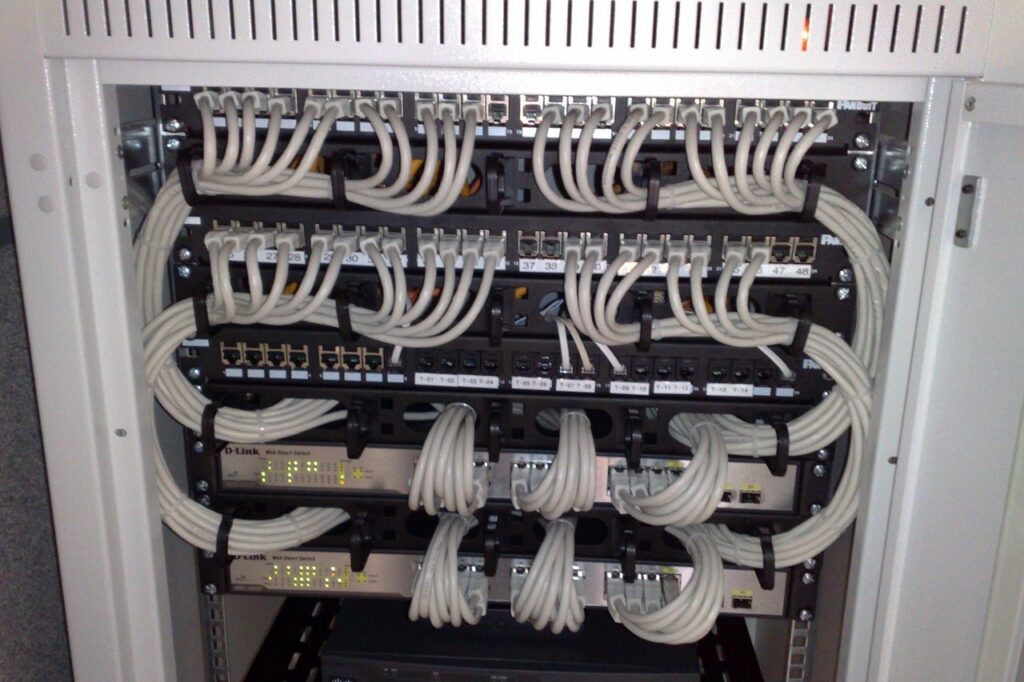
VDR.ai has partnered with LLM.co to deliver custom AI hardware and private language model deployments designed for the strict security requirements of financial institutions. This collaboration addresses a growing demand for infrastructure that allows organizations to integrate advanced machine learning without exposing proprietary information to public platforms.
A large language model is a machine learning model, typically based on a neural network, trained on vast amounts of text for natural language processing tasks such as generation, summarization, and translation. These models are the foundation for modern chatbots like ChatGPT, Claude, Gemini, Grok, Qwen, and DeepSeek. Generative pre-trained transformers, or GPTs, are a specific type of LLM pre-trained to predict the next word and fine-tuned to follow instructions and act as assistants.
Before the emergence of transformer-based models in 2017, language models relied on earlier statistical and neural architectures. In the early 1990s, IBM pioneered word alignment techniques for machine translation, which helped establish corpus-based language modeling. By 2001, smoothed n-gram models trained on 300 million words achieved state-of-the-art performance on benchmark tests. During the 2000s, researchers began compiling massive text datasets from the internet to train statistical models, eventually shifting toward neural networks around 2012. This period saw the development of word embeddings and sequence-to-sequence models using long short-term memory networks. Google transitioned its translation service to neural machine translation in 2016, replacing statistical phrase-based models with deep recurrent neural networks.
The current landscape shifted significantly at the 2017 NeurIPS conference, where Google researchers introduced the transformer architecture in their paper “Attention Is All You Need”. Unlike earlier methods that processed data in a fixed, sequential order, transformers use self-attention mechanisms to ingest vast datasets simultaneously. This architecture allows technical professionals to use LLMs as core architectural elements that are changing how digital infrastructures are built and maintained.
Securing Proprietary Data Through Private Instances
For financial institutions and other regulated industries, security is the primary concern when integrating AI with proprietary code or sensitive client data. Engineers must learn how to set up private instances of these models to ensure that sensitive data stays within a secure cloud environment. This approach prevents proprietary information from being used to train public versions of the models, which is a common risk when using open-access AI tools.
Technical professionals are moving beyond treating LLMs as simple conversational robots by connecting them directly to internal databases and software tools via application program interfaces. These APIs allow the AI to perform specific tasks, such as executing code or searching through internal repositories, while keeping the data flow contained within a controlled environment. Relying on these models without understanding their internal logic creates a reliability risk, so developers must master how model settings influence results to ensure the AI handles complex data consistently.
This technical shift is part of a broader trend in the AI market. The LLM technology market is expected to grow by about 33 percent every year through 2030, according to MarketsandMarkets. As these models move into mainstream engineering practice, proficiency in implementing and securing them is transitioning from a niche skill into a core requirement for technologists.
Solving The Problem Of AI Hallucinations
One of the most significant challenges in deploying LLMs for professional use is the risk of hallucinations, which are generated facts or code that appear correct but are actually wrong or broken. Biased or inaccurate training data can make an LLM’s output less reliable, necessitating rigorous benchmark evaluations to measure model reasoning, factual accuracy, alignment, and safety.
To mitigate these risks, developers use retrieval-augmented generation, or RAG, to force the AI to look up information in a trusted source, such as a company’s internal database. By tethering the model to a verified, private knowledge base, engineers can ensure that the AI provides answers grounded in factual, company-specific data rather than relying solely on its pre-trained patterns. This integration of retrieval systems is essential for industries where accuracy is a compliance requirement rather than a preference.
The global scale of LLM usage highlights the rapid adoption of these technologies. Global usage of large language models reached 188 trillion tokens over a weekly period, an increase of 14.63 percent from the previous week, according to OpenRouter data. Chinese AI models accounted for 93.54 trillion tokens during this period, while US models recorded 22.47 trillion tokens. As these models continue to power advancements in reasoning, coding, and automation, the focus for developers remains on building safe and effective digital infrastructure.
Future Trends In Technical Integration
As we look toward 2030, the integration of LLMs into professional workflows is expected to accelerate. Technical professionals are increasingly using these models as reasoning engines to orchestrate complex tasks, such as identifying vulnerabilities in source code and transforming fragmented project discussions into rigorous technical specifications. This evolution represents a move toward more precise, automated engineering practices that reduce the manual burden of repetitive coding and documentation tasks.
The development of specialized models also continues to expand across different sectors. For instance, meteorological departments in more than 40 countries have used China’s AI-driven MAZU model for early weather warning services via the cloud, with customized versions deployed in seven countries including Pakistan, Ethiopia, and the Solomon Islands. Other models, such as MiniMax’s M3.1 Flash, have introduced improvements in complex agent tasks, computer operation, and cybersecurity, while also achieving significant reductions in usage costs.
For families and individuals interacting with these systems, the human side of this technology involves a transition toward more convenient digital tools. Whether through native speech generation in different languages or automated assistance in professional environments, the goal of these deployments is to make digital infrastructure more accessible and effective. As with any significant technological advancement, those implementing these tools should continue to consult with their technical leads and security teams to ensure that their specific deployments meet the necessary safety and compliance standards for their industry. The rapid growth of the sector suggests that these private, secure AI architectures will remain a central focus for global industry through the end of the decade.
Sources
- Large language model
- IEEE Rolls Out Large Language Models Virtual Training Course
- DeepSeekâs V4.1-Flash-1017 model tops global weekly usage rankings as token volume surges 801%
Photo: Dsimic (CC BY-SA 4.0)