The Unofficial Tools Unlocking Hidden Performance in NVIDIA RTX 30 Series GPUs
A new unofficial Linux-based tool named gpu-unlock is bypassing artificial compute limits on consumer graphics cards, driving up specific artificial intelligence throughput by as much as 60 percent. The shift is transforming how home developers and researchers look at older hardware, allowing consumer-grade boards to edge closer to the capabilities of professional-tier hardware without requiring a costly system upgrade. The trend underneath this development points to a growing community of modders finding ways to tap into dormant silicon capacity already built into standard consumer products.
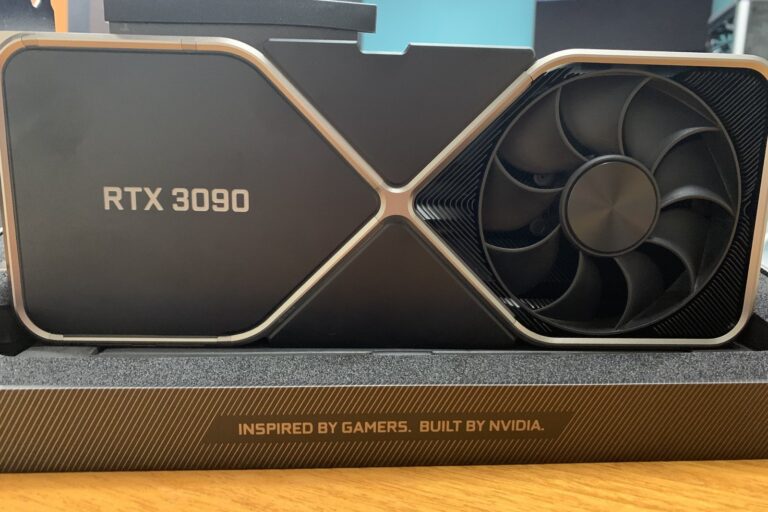
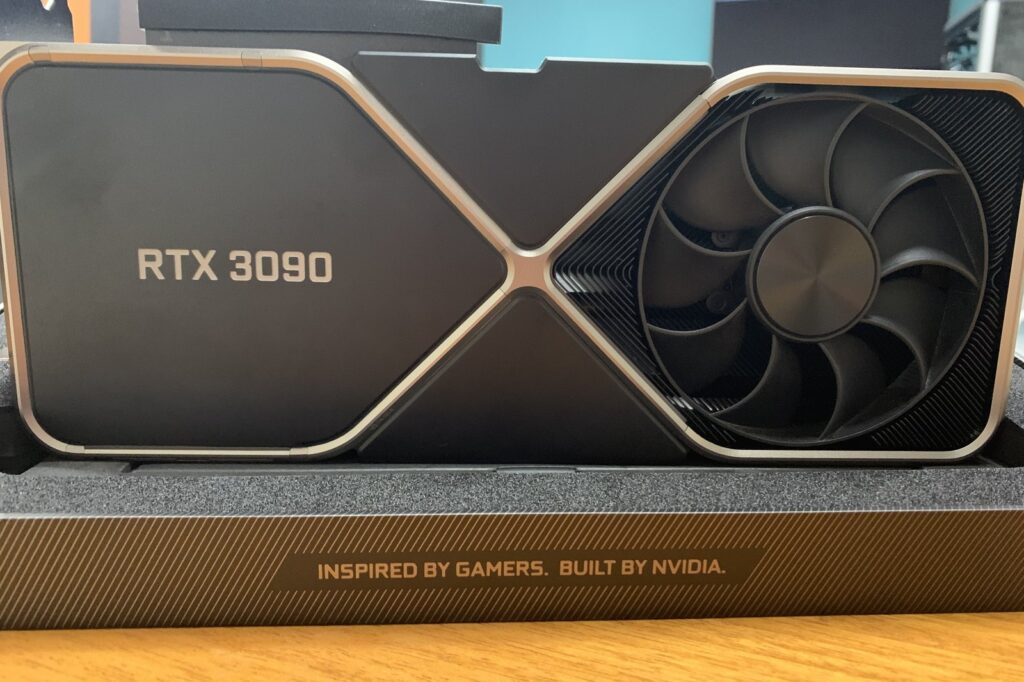
The GeForce RTX 30 series, developed by NVIDIA and based on the Ampere architecture, began shipping on September 17, 2020. This lineup features second-generation ray tracing cores and third-generation Tensor Cores designed to compete with AMD’s Radeon RX 6000 series. The generation includes entry-level and mid-range options up to enthusiast-class cards like the RTX 3080 Ti, RTX 3090, and RTX 3090 Ti. During the 2020 through 2023 global chip shortage, the series suffered severe availability issues driven by high pandemic demand, supply chain constraints on Samsung wafers, and crypto mining operations. NVIDIA even attempted to limit crypto mining by introducing algorithms to detect mining behavior in cards like the RTX 3060. The RTX 30 series was eventually succeeded by the Ada Lovelace microarchitecture in the RTX 40 series, but the older Ampere cards remain widely used in home development setups.
The gpu-unlock project builds on earlier techniques originally used to unlock NVIDIA’s CMP mining GPUs, according to reports. The tool functions by rewriting low-level GPU registers before the official NVIDIA driver loads, requiring a PCIe Function Level Reset to take effect. It targets the GA102, GA103, GA104, and GA106 GPU chips found in the RTX 30 series. By reconfiguring the Tensor Cores, the software doubles the issue rate of instructions that use FP16 or BF16 inputs with FP32 accumulation. Theoretical TFLOPS gains tested on an RTX 3090 Ti at a 450W power limit include a 35 percent increase for FP16, an 80 percent increase for BF16, and a 94 percent increase for TF32. Real-world benchmark tests on an RTX 3090 Ti running ComfyUI showed BF16 throughput improvements of approximately 60 percent, dropping processing times for the “MOSS-Image SFT” and “MiniMax H3” models significantly.
Despite these impressive theoretical jumps, technical limitations and hardware risks remain part of the equation. The modifications do not increase memory bandwidth, CUDA core counts, or gaming performance, and they do not assist with DLSS. Because token generation in local large language models is constrained by memory bandwidth rather than compute, token output speeds remain largely unchanged even though prompt processing can improve. Furthermore, performance gains are not universal across all hardware, with some reports showing no improvement on specific models like the RTX 3080 Ti. The changes are entirely temporary and reset when the GPU loses power, but using these unofficial tools carries risks, including potential warranty voids and boot failures on unsupported setups.
What is changing for home AI developers is the sheer viability of older hardware for demanding local workloads. Similar community projects have now unlocked the RTX 40 series and even the older RTX 20 Turing series using comparable techniques. As repositories on GitHub and Hugging Face continue to evolve, watch this space to see if developers manage to streamline these experimental modules for broader operating systems. For now, home developers working with Linux environments have a powerful new method to extract professional-grade compute from hardware they already own.
Mechanics of the gpu‑Unlock Kernel Module
According to the developer’s GitHub repository, gpu‑unlock 1.0.0 is delivered as a Linux kernel module that directly rewrites a register responsible for selecting the GPU’s operating speed. After the register is altered, the module triggers a PCIe Function Level Reset (FLR) to apply the new setting before the unmodified NVIDIA driver claims the device. Because the reset occurs prior to driver initialization, loading the module manually after the driver is active has no observable effect.
The “2x” figure cited by the project does not describe a blanket doubling of compute power; it specifically denotes that the issue rate of a particular matrix‑multiply instruction is doubled. By reconfiguring the Tensor Cores, the tool causes FP16 and BF16 instructions—both of which accumulate results in FP32—to be dispatched at twice their normal speed. Section 1.4.1.5 of NVIDIA’s Ampere Tuning Guide confirms that BF16 operations already use FP32 for accumulation, but the guide does not certify the unlock’s methodology.
Crucially, the approach avoids any modifications to the VBIOS or permanent hardware changes. The register tweak is transient, persisting only until power is removed from the GPU, after which the hardware reverts to its factory‑specified limits. This temporary, driver‑preemptive strategy is what enables the observed Tensor Core throughput gains without altering core counts, memory bandwidth, or gaming‑related features.
Instruction Issue Rates Versus Total Compute
The “2x” figure cited by the project does not mean that overall GPU compute performance or application speed doubles across the board. It is necessary to distinguish between the format of the numbers fed into a computation and the precision used when accumulating the multiplication results. Section 1.4.1.5 of NVIDIA’s “Ampere Tuning Guide v11.6.1” describes the two separately, stating explicitly that BF16 operations use only FP32 for accumulation.
Specifically, the “2x” refers to the speed at which instructions are sent to the execution units. The tool changes the configuration of the Tensor Cores so that instructions taking FP16 or BF16 inputs and accumulating the multiplication results in FP32 are issued at twice the rate. This refers to the issue rate of a specific math instruction rather than a blanket doubling of compute power.
Sources
- GeForce RTX 30 Series Gets Up to ~60% More AI Throughput With Unofficial gpu-unlock Tool
- GeForce RTX 30 series
- Modders unlock NVIDIA GeForce RTX 20, 30 and 40 series compute limits, nearly doubling some Tensor Core throughput
Photo: Adam Kapetanakis (CC BY-SA 4.0)