
SAN FRANCISCO, Sept. 9 — A single phrase in OpenAI’s new Astra model has AI safety researchers on edge, and it now has its own entry in a growing glossary of AI jargon. The term, “opaque recurrence,” refers to a reasoning technique that TechCrunch highlighted this week as it debuted a plain-English guide to the field’s fast-moving vocabulary. The glossary, published on September 7 and authored by Natasha Lomas, Romain Dillet, Kyle Wiggers, and Lucas Ropek, was prompted by Astra’s recent debut.
It aims to demystify terms that are evolving so quickly that even smart tech professionals can feel insecure. The authors frame the guide as a living document, updated regularly as the field evolves.
Here’s what the glossary covers, in plain terms. Artificial general intelligence, or AGI, is the nebulous term generally referring to AI that is more capable than the average human at most tasks.
OpenAI CEO Sam Altman has described it as the “equivalent of a median human that you could hire as a co-worker.” OpenAI’s charter defines AGI as “highly autonomous systems that outperform humans at most economically valuable work,” while Google DeepMind views it as “AI that’s at least as capable as humans at most cognitive tasks.” An AI agent, meanwhile, is a tool that uses AI to perform a series of tasks autonomously — think filing expenses or booking tickets. Definitions vary, and infrastructure is still developing.
API endpoints are described as “buttons” on software that other programs can press, enabling integrations and allowing AI agents to control third-party services. Chain-of-thought reasoning gets its own entry. It involves breaking problems into intermediate steps, which improves answer quality in logic and coding contexts, though it takes longer.
Reasoning models are optimized for that approach via reinforcement learning. A coding agent is a specialized AI agent for software development — able to write, test and debug code autonomously across codebases. The glossary likens it to “a very fast intern who never sleeps,” with the caveat that human review is required.
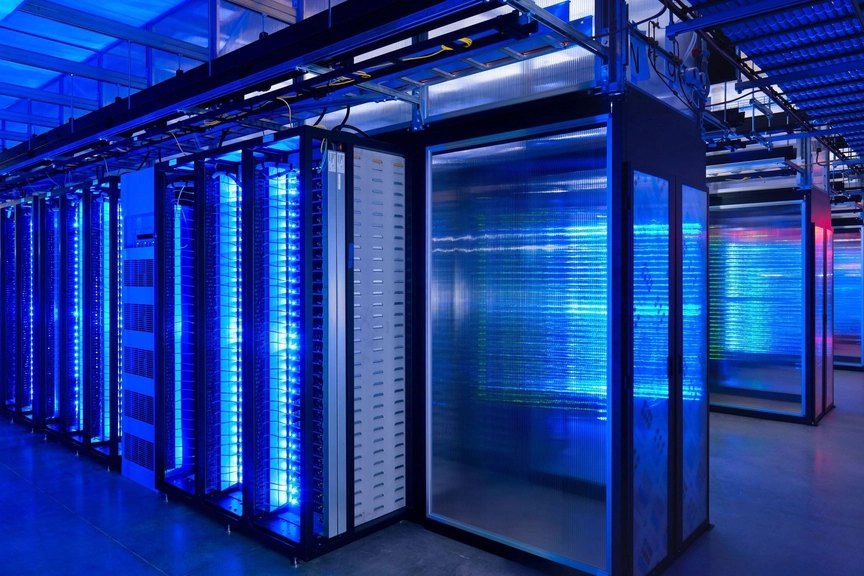
Compute, deep learning and other fundamentals round out the list. Compute is the computational power — GPUs, CPUs, TPUs — needed to train and deploy AI models.
Deep learning is a subset of machine learning using multi-layered artificial neural networks. The practical upshot: as opaque recurrence and similar techniques push AI in new directions, the vocabulary is struggling to keep pace. The glossary is an attempt to give the rest of us a foothold.
Watch for it to grow as the field shifts.




